Skip to content

JournalEvaluationNo. 11

When to Bring In CRM and GTM Integration Experts

The signs that it is time to hire CRM and GTM integration help, which kind of expert fits which problem, what to settle before you hire, and when you do not need one yet.

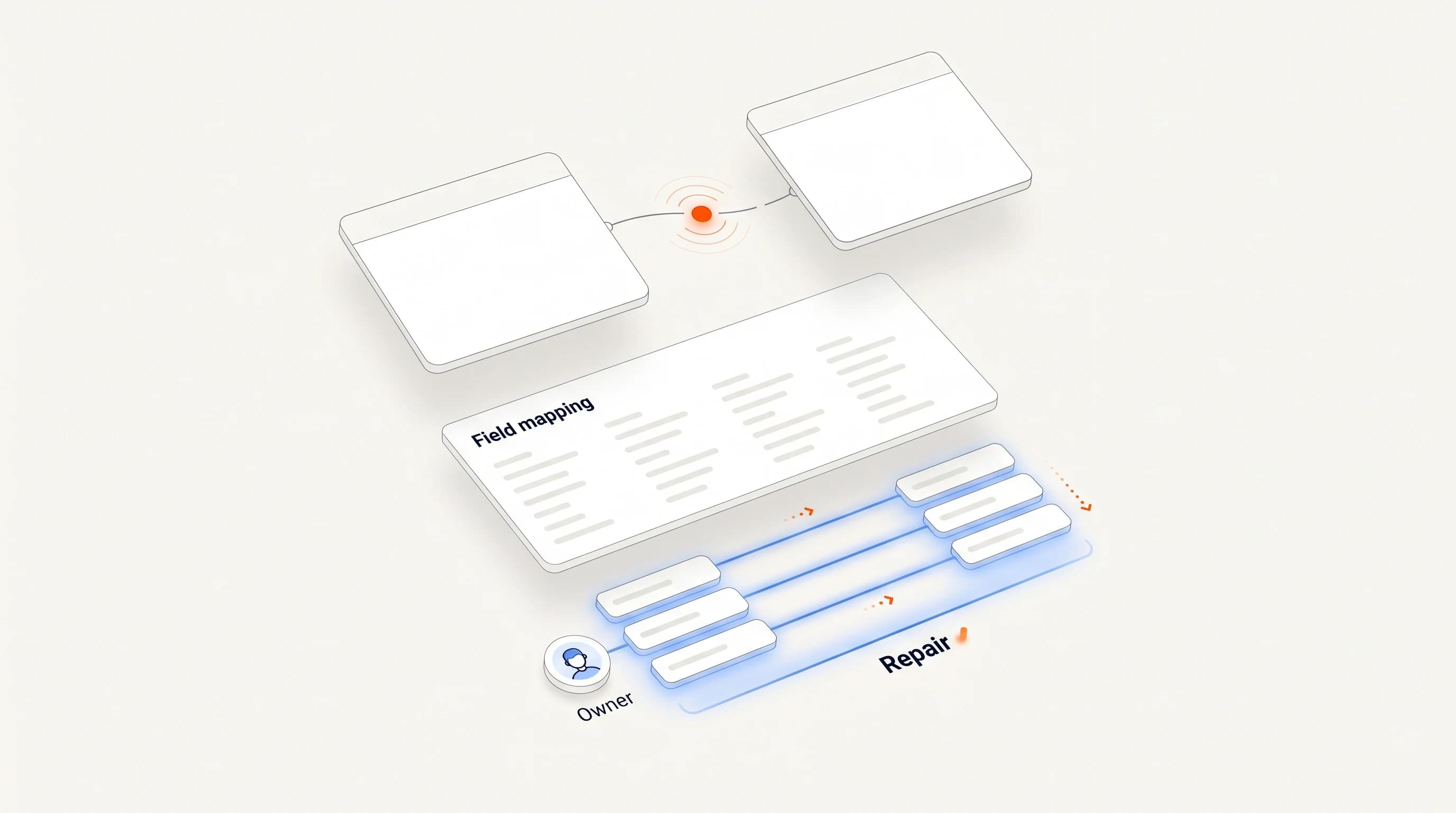
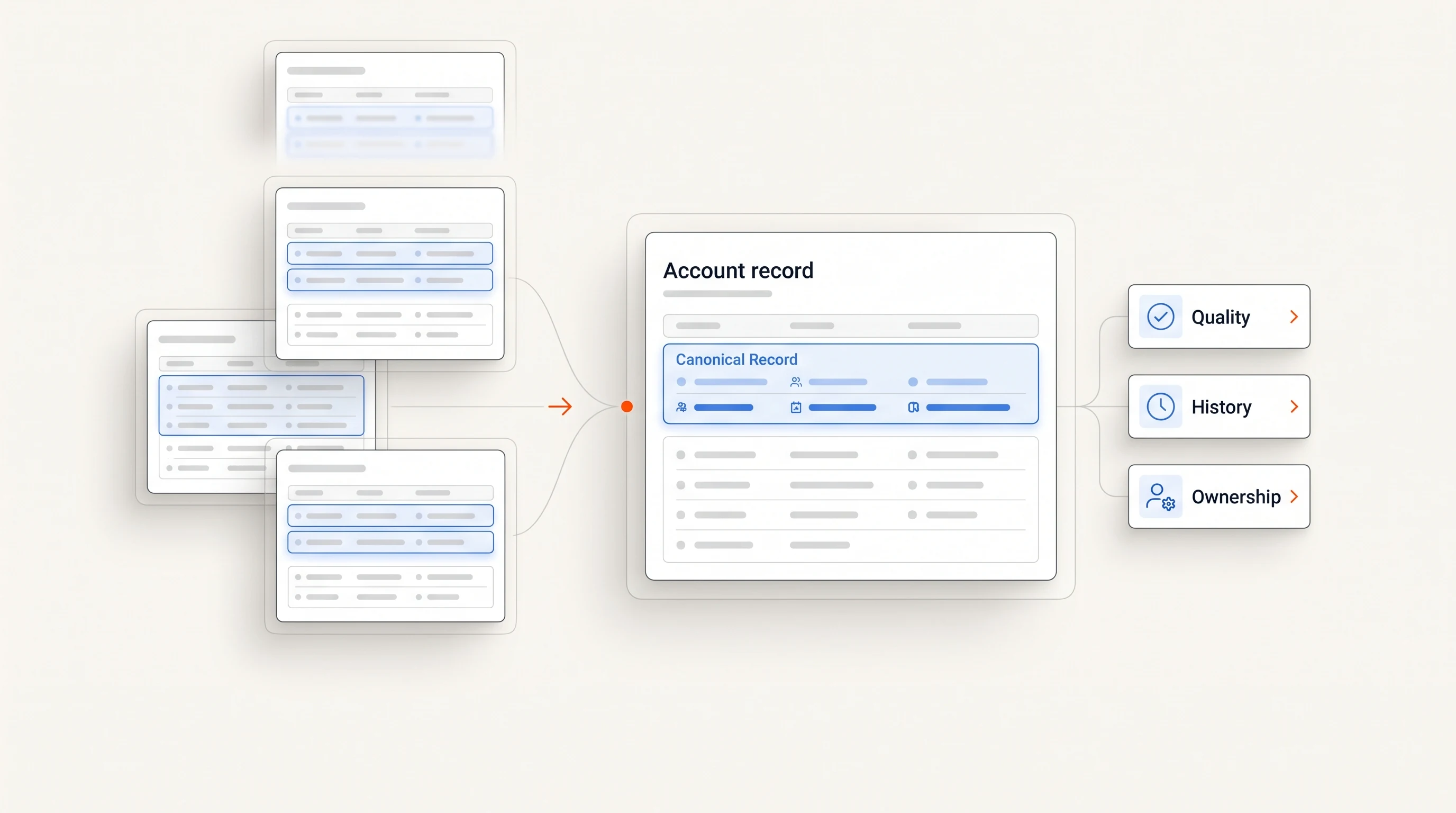
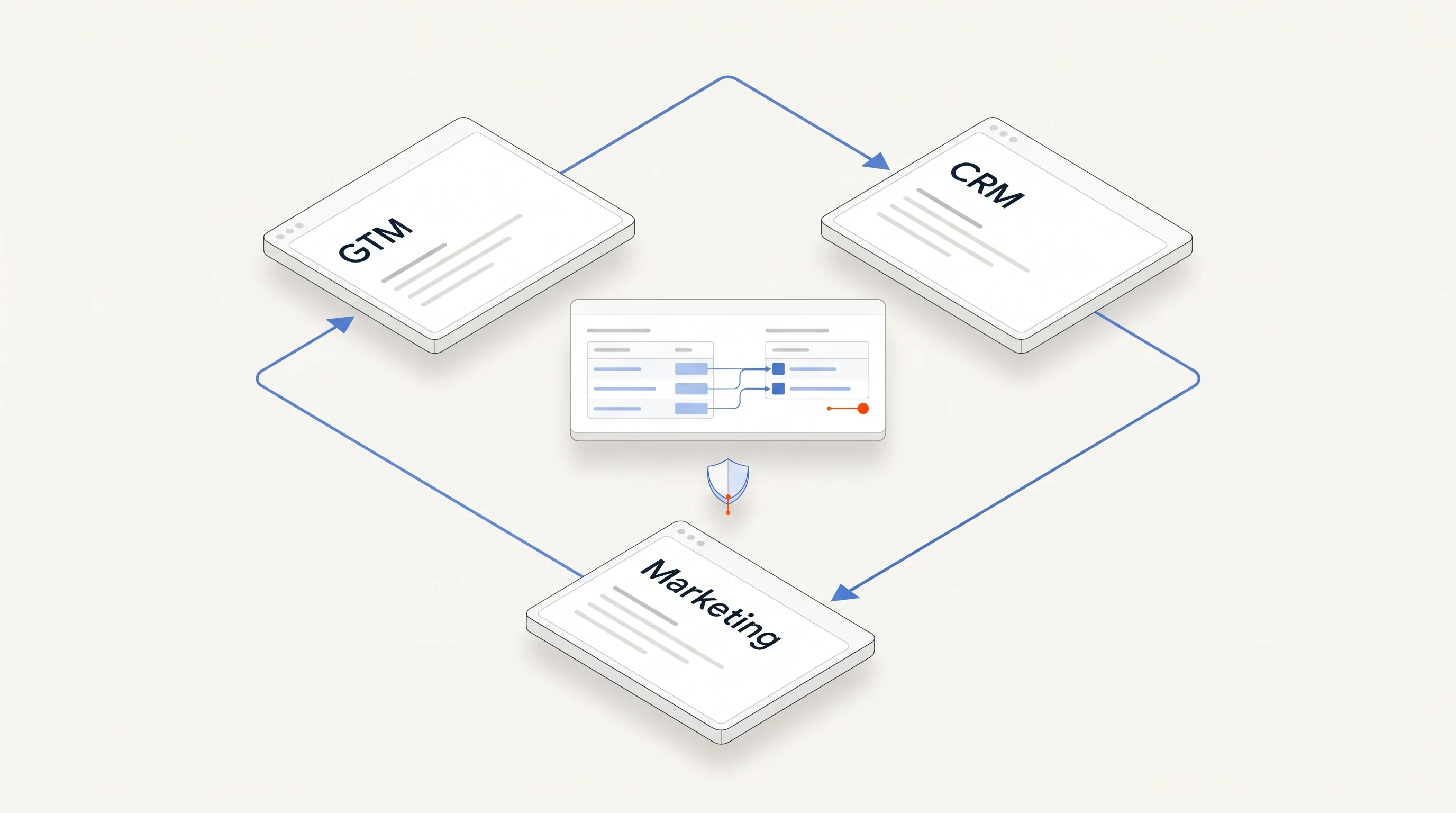
A field mapping plan repairs a broken connection between systems.
Contents
  1. 01Signs it is time to bring in help
  2. 02Match the expert to the problem
  3. 03Settle these before you hire anyone
  4. 04Fractional, agency or in-house
  5. 05Scope the first engagement tightly
  6. 06When you do not need an expert yet
  7. 07Where Perpetual fits

Published by Perpetual

Bring in CRM and GTM integration experts when the problem is no longer a missing tool but a missing skill: a new CRM you want built right the first time, a setup the team has outgrown, or data that moves between marketing, sales and analytics without anyone trusting it. The most expensive mistake is hiring the wrong kind of expert, such as a CRM implementer when you first need someone to define the sales process, or a GTM engineer before the team agrees on what a qualified lead is.

Three things to know

  • The trigger is usually an observable gap, not a feeling that the stack is messy.
  • Match the expert to the problem: process, CRM configuration, GTM engineering and custom integration are different jobs.
  • Settle definitions and ownership before anyone touches the CRM, or the expert will build your confusion into the system.

Signs it is time to bring in help

Look for concrete, repeated problems rather than general frustration:

  • A new CRM rollout. You are moving to Salesforce, HubSpot or another CRM and want the data model, permissions and pipelines built correctly from the start (Grow in Tandem).
  • An outgrown setup. The CRM reflects how the team worked two years ago. Reps keep side spreadsheets, and nobody trusts the pipeline report.
  • Teams that do not speak the same language. Marketing and sales count leads differently, and data is collected but not understood (Forecom Solutions).
  • Broken handoffs. Leads, meetings or replies get lost between tools, or the same person is contacted by two systems in the same week.
  • Integrations nobody owns. A sync was set up by someone who left, and changing a field name breaks things nobody can trace.

If two or more of these are true and nobody on the team has the time or skill to fix them, outside help usually pays for itself.

Match the expert to the problem

"CRM expert" covers several different jobs. Hiring the wrong one is one of the most common reasons these projects fail (Grow in Tandem).

ExpertHire whenWhat you should get
RevOps strategistStages, definitions and ownership are unclear or disputedWritten lifecycle stages, lead definitions, routing and ownership rules
CRM implementer or adminThe process is agreed and the CRM needs to reflect itData model, fields, pipelines, permissions, reports and admin training
GTM engineerData needs to move and be enriched between tools automaticallyWorking workflows across CRM, marketing automation and outreach tools, with documentation
Integration developerNo native connector does what you needA tested custom integration with logging, error handling and an owner

Sequence matters. Strategy comes before configuration, and configuration comes before automation. Automating an undefined process only makes the confusion faster.

Settle these before you hire anyone

An expert can only build what the team has agreed on. Before the first call, write down:

  1. What counts as a qualified lead, and who decides.
  2. Your lifecycle stages, from first contact to customer, with the exit criteria for each.
  3. Who owns each account and contact, and how ownership changes.
  4. Which system owns which field. For example, the CRM owns owner and deal stage; the marketing platform owns subscription status.
  5. The three reports leadership needs to trust.

If the team cannot agree on these, start with a RevOps strategist and leave the CRM alone for now.

Fractional, agency or in-house

  • Fractional specialist. Good for small and growing teams that need senior judgment a few days a month, not a full-time hire.
  • Agency or consultancy. Good for a defined project with a deadline, such as a CRM migration, where you need several skills at once.
  • In-house hire. Worth it once the stack is large enough that someone needs to own it every day, and changes happen weekly.

Many teams combine these: an agency for the migration, then a fractional or in-house owner to keep it working.

Scope the first engagement tightly

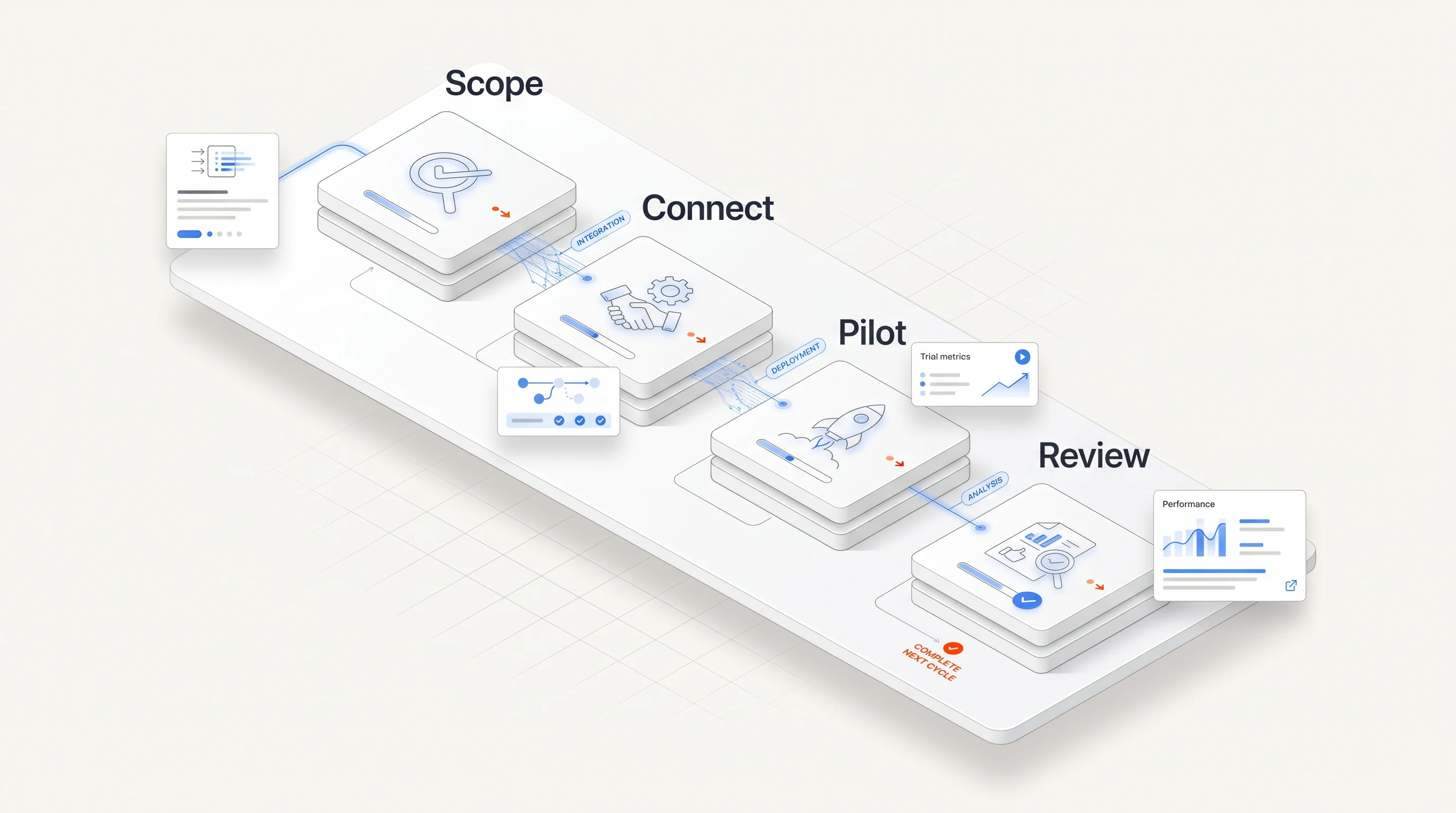
Whoever you hire, define the outcome rather than the hours. A good first engagement includes:

  • a written field map showing what each integration reads and writes;
  • a test plan run before go-live, including duplicates, ownership conflicts and opt-outs;
  • documentation your team can follow without the expert;
  • training for whoever will own the system afterwards.

When you do not need an expert yet

Small teams with one sales motion, a handful of tools and a clear owner can often get by with a CRM's default setup and native integrations. If the problem is that nobody has time to find accounts and start conversations, an integration project will not fix it; that is a workflow and capacity problem, not a data model problem.

Where Perpetual fits

Perpetual is designed to start without an integration project. Onboarding reads your website and drafts a business profile, and campaigns send email from your own connected mailboxes within a saved sending policy. Each opportunity carries its public source, the selected person and the reasoning, so the evidence is ready to log wherever your team records outcomes. For what to check when connecting any GTM tool to your CRM, see our CRM integration checklist.

Key takeaways

PointDetail
Look for observable triggersA CRM rollout, an outgrown setup, broken handoffs or unowned integrations are clear signs.
Match the expert to the problemStrategy, CRM configuration, GTM engineering and custom integration are different jobs.
Agree definitions firstQualified lead, lifecycle stages, ownership and field ownership must be written down before building.
Buy a system, not a dependencyScope by outcome, with a field map, a test plan, documentation and training.

Frequently asked questions

What is the difference between a RevOps consultant and a GTM engineer?

A RevOps consultant defines how revenue work should run: stages, definitions, routing and ownership. A GTM engineer builds the automation that moves and enriches data between tools so that process runs without manual work.

How much should we have in place before hiring a CRM implementer?

At minimum: agreed lifecycle stages, a definition of a qualified lead, ownership rules, and the reports leadership needs. Without these, the implementer has to guess, and the CRM will reflect those guesses.

Can a small team skip outside help?

Often, yes. A small team with one sales motion and a clear owner can usually work with the CRM's default setup and native integrations, and bring in help when one of the triggers above appears.
Sources

  1. https://growintandem.com/fractional-revops-gtm-engineering-crm-guide/
  2. https://www.forecom-solutions.com/gtm-engineering-for-marketing-and-sales
Keep reading27 more
01

12 Buying Signal Examples and What to Do Next

A practical buying-signal library: what each observation supports, what remains unknown, and the next step to take. Includes a free CSV worksheet.

Signals7 min read
02

How to Use Hiring Signals for Sales Prospecting

Turn public job postings into a focused prospecting play: check account fit, verify the evidence, find the responsible person and write a relevant opener.

Research8 min read
03

4 Signal-Based Cold Email Templates You Can Adapt

Original cold email templates for relevant hiring, new responsibilities, expansion and useful follow-ups. Includes source checks and a free CSV download.

Outreach7 min read
04

How to Measure Signal-Based Outbound: A Campaign Scorecard

Measure account selection, positive replies, qualified meetings held and total cost with clear denominators. Includes a free account-level CSV worksheet.

Research8 min read
05

Job Postings as Buying Signals: What They Tell You

Which job postings matter for which offer: clustered roles, a first hire in a new function or a reposted role, and what a posting does not prove.

Signals10 min read
06

Hiring Signals vs. Intent Data: What Each Shows

Where hiring signals and third-party intent data come from, how fresh and checkable each is, and when to use one, the other or both.

Signals9 min read
07

How to Find Companies Hiring SDRs (and When to Reach Out)

Find companies hiring SDRs on careers pages, job boards and LinkedIn Jobs, judge each posting, and decide whom to email and when.

Research9 min read
08

CRM vs. Dedicated GTM Automation Platform: Which Do You Actually Need?

A CRM keeps the record; a GTM automation platform starts the work. How to tell which layer is missing in your stack, what each should own, and where the two must connect.

Evaluation8 min read
09

How to Evaluate a GTM Automation Vendor's Approach to Intent Signals

A checklist for evaluating how a GTM automation vendor sources, qualifies and acts on intent signals, and how to test it on your own data before you buy.

Evaluation7 min read
10

Using Signal Data to Optimize Paid Acquisition Campaigns

How to use signal data in paid acquisition: send ad platforms the conversions and values that matter, clean noisy events, and, in B2B, feed pipeline stages and account signals back into targeting.

Signals7 min read
12

Account Data Management: What Sales Teams Should Evaluate Before Buying

What sales teams should check before buying account data management software: data quality you can test, ownership, how context moves between systems, failure handling and change tracking.

Evaluation6 min read
13

Signal-Based Prospecting for Enterprise RevOps Teams With Complex Deal Cycles

How enterprise RevOps teams use buying signals to reach accounts before the RFP, keep them out of open deals, reach the buying group and measure pipeline.

Signals8 min read
14

How to Automate Acting on Buying Signals to Move Deals Forward

How to automate acting on buying signals: a playbook per signal type, what stays human, routing, drafting from evidence and a four-week rollout.

Outreach8 min read
15

Real-Time Buying Signal Detection: How to Evaluate Go-to-Market Platforms That Make It Core

What real-time buying signal detection means per signal family, how fresh each should be, and how to tell a core capability from a bolt-on feature.

Signals7 min read
16

Go-to-Market Platforms That Integrate With Your CRM and Marketing Automation: What to Check Before You Buy

How to judge whether a go-to-market platform integrates well with your CRM and marketing automation: patterns, read and write rules, suppression and a one-week test.

Evaluation7 min read
17

Sales Automation Platforms With Fast Implementation: How to Get Live in Weeks, Not Quarters

What makes sales automation slow to implement, what fast implementation looks like, questions to ask before you sign, and a four-week plan to go live.

Evaluation6 min read
18

Revenue Automation Platforms for Mid-Market Teams Pursuing Continuous Opportunity Discovery

A practical guide to revenue automation platforms that help mid-market teams find opportunities continuously, act on signals, and move deals forward.

Evaluation9 min read
19

Unified Go-to-Market Platforms: Combining Signal Detection and Deal Progression

What unified go-to-market platforms are, how they combine signal detection with deal progression, and what to look for when evaluating them.

Signals7 min read
20

Affordable Signal-Based Pipeline Generation Tools for Bootstrapped Startups

A practical guide to affordable signal-based pipeline generation tools for bootstrapped startups, with what to look for and where to start.

Evaluation5 min read
21

Migrating From Manual Prospecting to an Automated Signal-Based Go-to-Market System

How to move from manual prospecting to an automated signal-based go-to-market system: what changes, the stages, the data work and the pitfalls.

Signals12 min read
22

Choosing go-to-market automation for a small sales team with no ops function.

A small team needs fewer moving parts, not more dashboards. Four questions to decide what to automate and what to keep in human hands.

Evaluation2 min read
23

Signal-based prospecting for startups that need predictable pipeline.

Volume outbound makes pipeline feel random. Prospecting against observable buying moments gives a startup a steadier rhythm, if the signals are checked first.

Signals2 min read
24

Tools That Help Sales Development Teams Prioritize High-Intent Accounts Without Manual Research

How intent data, scoring and enrichment tools help SDR teams prioritize high-intent accounts without manual research, plus a comparison table.

Evaluation9 min read
25

Evaluating Customer Support and Track Record in Signal-Based Sales Platforms

How to evaluate customer support and track record when you compare signal-based sales platforms, from reference calls to CRM sync and time-to-first-signal.

Signals13 min read
26

A signal is not a buying intent.

A new hire tells you something changed. It does not tell you someone is ready to buy. Better outbound starts with that distinction.

Signals2 min read
27

What belongs in a lead brief?

The source, the change, the timing, and the unanswered question. A small brief that makes an outbound decision easier to review.

Research2 min read
28

Write the question before the pitch.

A practical way to turn account research into an opener that earns a conversation without overstating what you know.

Outreach2 min read

Put your GTM in perpetual motion.

Get started

Sending stays within the limits you set, and you can pause it any time.

When to Bring In CRM and GTM Integration Experts