JournalSignalsNo. 01
12 Buying Signal Examples and What to Do Next
A practical buying-signal library: what each observation supports, what remains unknown, and the next step to take. Includes a free CSV worksheet.
Matija Nikolić7 min read8 sections

Contents
Published by Perpetual
A useful buying signal gives a sales team a specific reason to look at an account now. That reason might be a question from a buyer, activity in your product, or a public change at the company. These observations carry different meanings. A request for a quote is direct commercial interest. An open job is evidence of work a company wants someone to do.
This guide separates those meanings and gives you a next step for each. Use the examples to build a short research queue around your own offer. The accompanying CSV is a planning resource; it is not a promise that every source is available in Perpetual.
What counts as a buying signal?
In sales, a buying signal is an observable action or change that may make a company worth approaching. Record the observation before interpreting it: who did what, where you saw it, when it happened, and which company it belongs to. Keep the interpretation in a separate field so another person can challenge it.
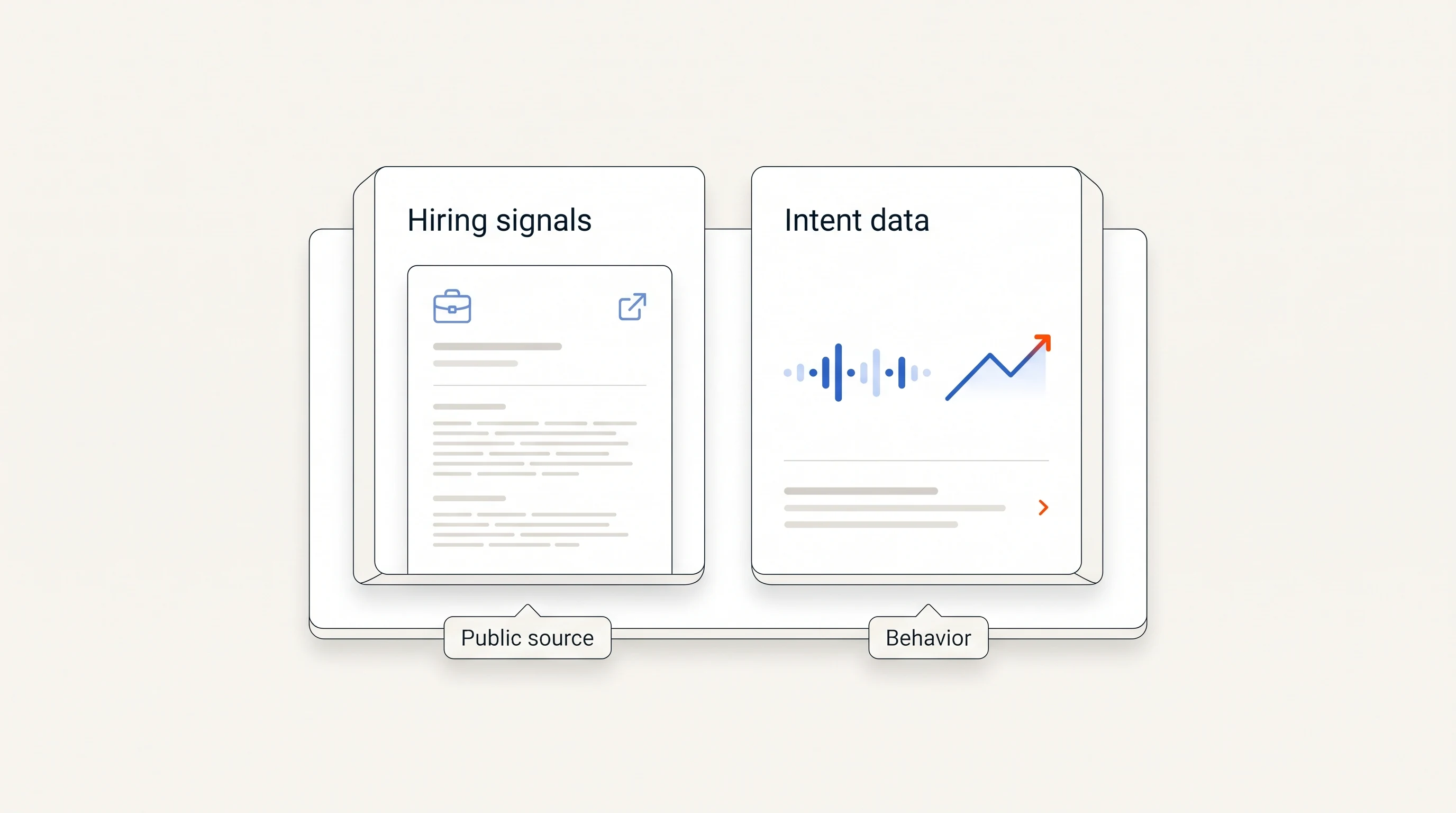
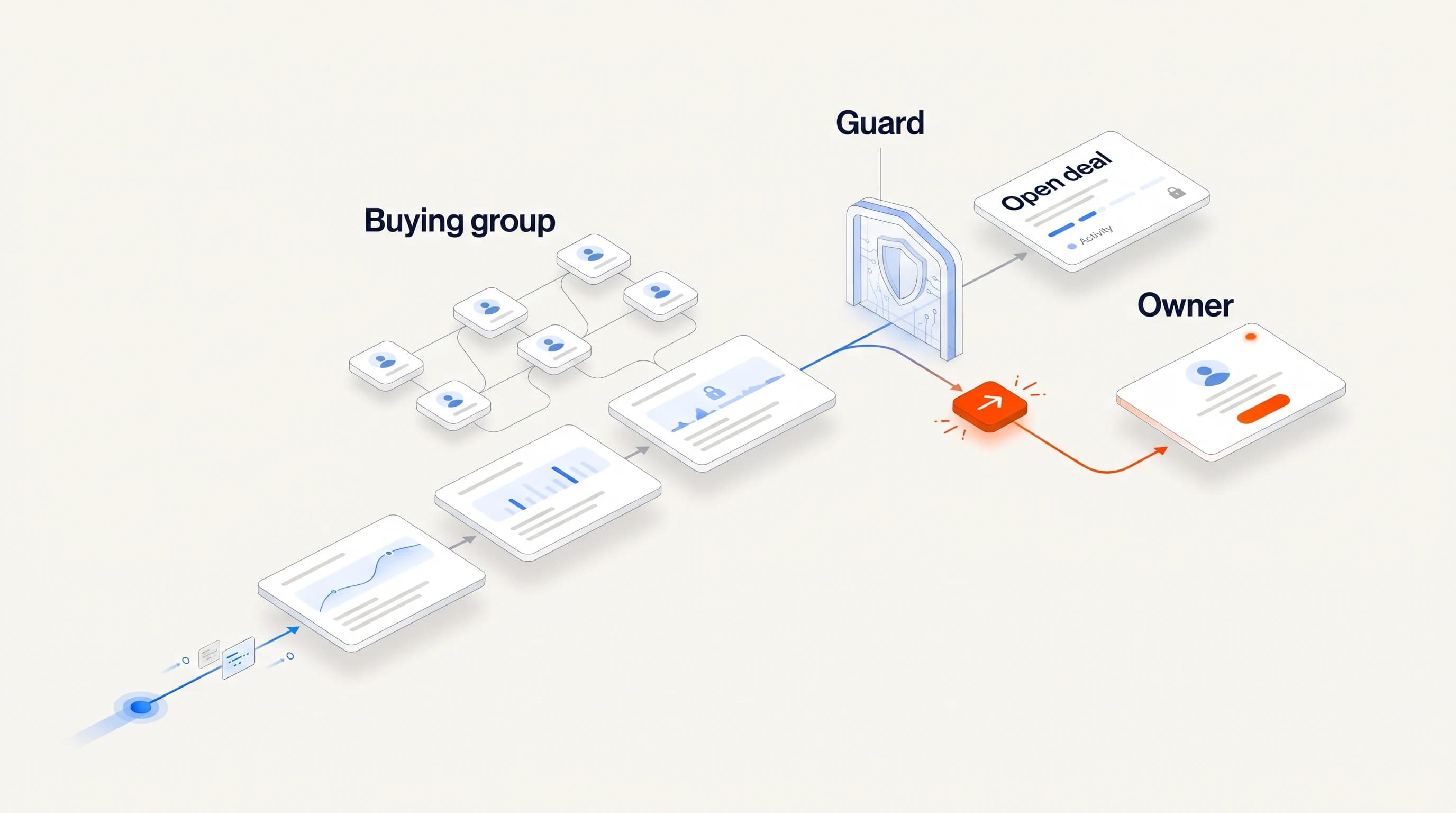
Three groups are useful. Direct requests describe something a buyer has asked you for. First-party activity describes behavior in your own website or product. Public company changes describe what is happening outside your relationship. The last group can support research even when the company has never heard of you.
Start with that distinction rather than a universal intent score. A company can fit your ideal customer profile and have no relevant change. It can also show considerable activity while being a poor fit for what you sell.
12 buying signals and the next step for each
The table is a research framework. The suggested actions are recommendations, not measured conversion rankings.
| Observed signal | What it supports | What remains unknown | Useful next step |
|---|---|---|---|
| 1. A pricing or proposal request | Someone has asked about a commercial next step. | Fit, authority, budget approval and timing. | Answer the request and clarify the scope. |
| 2. A specific evaluation question | A person is investigating a capability or limitation. | Whether an active purchase process exists. | Give a direct answer and ask about their use case. |
| 3. Repeated pricing-page visits | The observed visitor or matched account returned to pricing. | The visitor's identity, purpose and buying role. | Check identity and account fit before assigning outreach. |
| 4. Several colleagues use your product | Adoption may extend beyond one person. | Whether they share a project or need a paid team plan. | Review usage context and offer relevant help. |
| 5. A user reaches a product limit | A particular workflow has reached its current allowance. | Whether paying would solve a useful problem. | Explain the options for that workflow. |
| 6. A new role in a relevant function | The company is recruiting for stated responsibilities. | Whether this is expansion, replacement or an evergreen opening. | Read the responsibilities and verify the posting is active. |
| 7. Several relevant roles appear | Multiple distinct openings describe work in the same function. | Actual headcount growth and any purchasing plan. | Deduplicate jobs and research the function's owner. |
| 8. A new functional leader is announced | Someone has taken responsibility for a function. | Their priorities and appetite for new suppliers. | Verify their remit and ask about the work you support. |
| 9. A new office or market is announced | The company has publicly described an expansion. | Which processes and teams will change. | Check whether your offer serves that location and work. |
| 10. A funding round is announced | A financing event has been disclosed. | How the money will be allocated. | Look for a stated operating plan connected to your offer. |
| 11. A job or technical page names a tool | The source mentions that technology. | Whether it is installed, required or being evaluated. | Check the wording before making a compatibility claim. |
| 12. A person engages with your content | They interacted with a particular topic. | Whether they are a buyer or want a sales conversation. | Respond to their actual contribution and check relevance. |
Choose signals for your offer
Write a sentence connecting your product to a piece of work. For example, a service that helps sales managers onboard new reps might investigate companies recruiting several account executives. A service for payment operations might find that signal irrelevant. The same event means different things to different sellers.
For each candidate signal, answer four questions: can we verify the observation, does it relate to work we support, can we identify the responsible function, and can we ask a useful question without inventing a problem? If the connection needs several unsupported assumptions, choose a different signal.
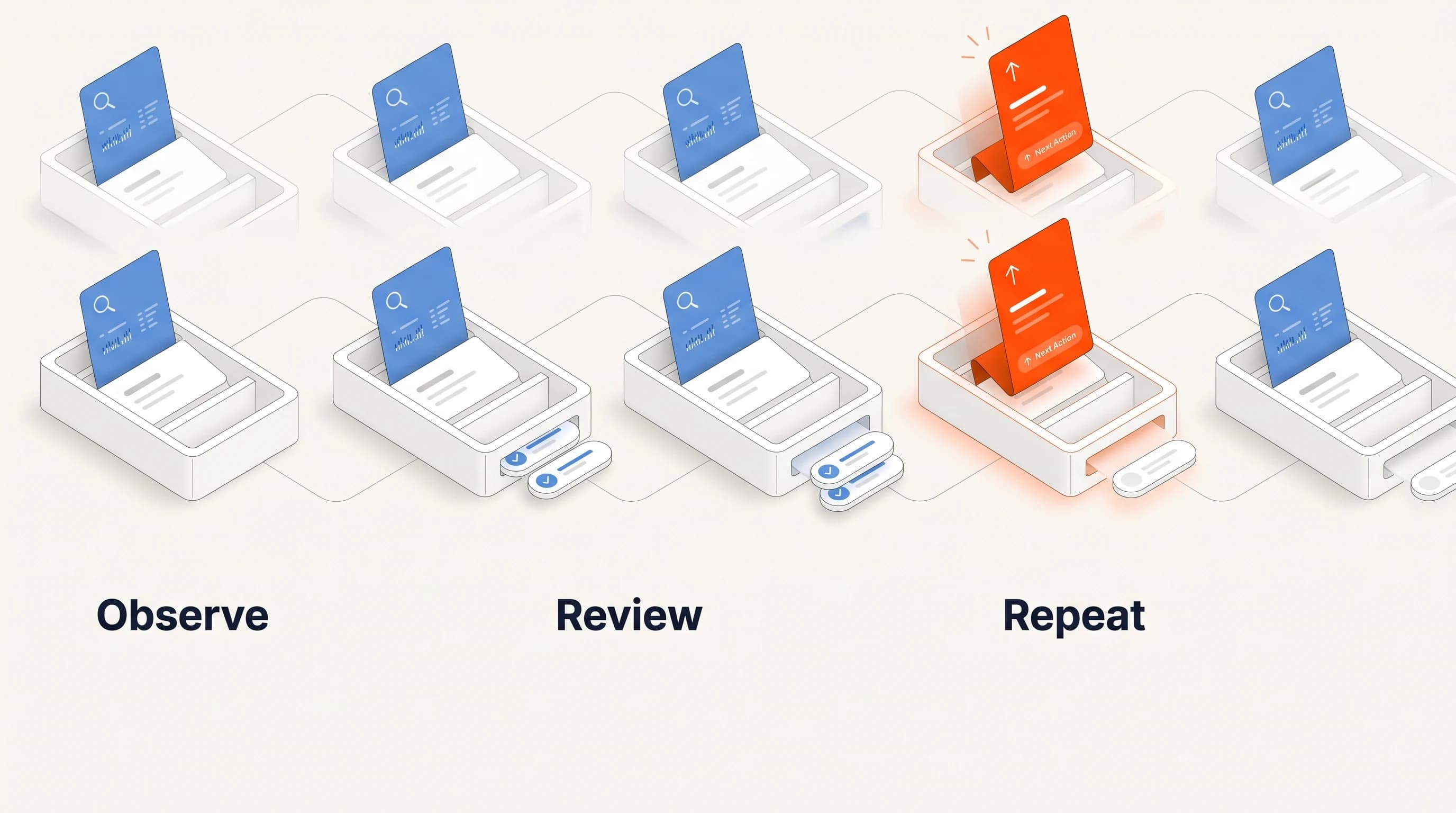
Begin with a small selection your team can inspect. Keep the signals you reject and the reason for rejection; those records explain whether the problem is account fit, source quality or the connection to your offer. Our hiring-signal playbook walks through this process for job postings.
Combine evidence without counting it twice
Two independent observations can make research more useful. A company announcement naming a new regional operation and a current opening for its local sales leader describe different parts of the same development. Together, they give you a better question about how that operation will work.
Three copies of one vacancy do not provide three independent signals. Neither do an announcement and two articles repeating it. Group records by the underlying event, retain their sources, and distinguish corroboration from duplication.
Set freshness rules around the event. A pricing inquiry needs a prompt response to the person who asked. A public hiring observation needs a check that the opening and its responsibilities are still current. Avoid treating every source as equally urgent merely because it arrived today.
A worked example: recruitment is the observation
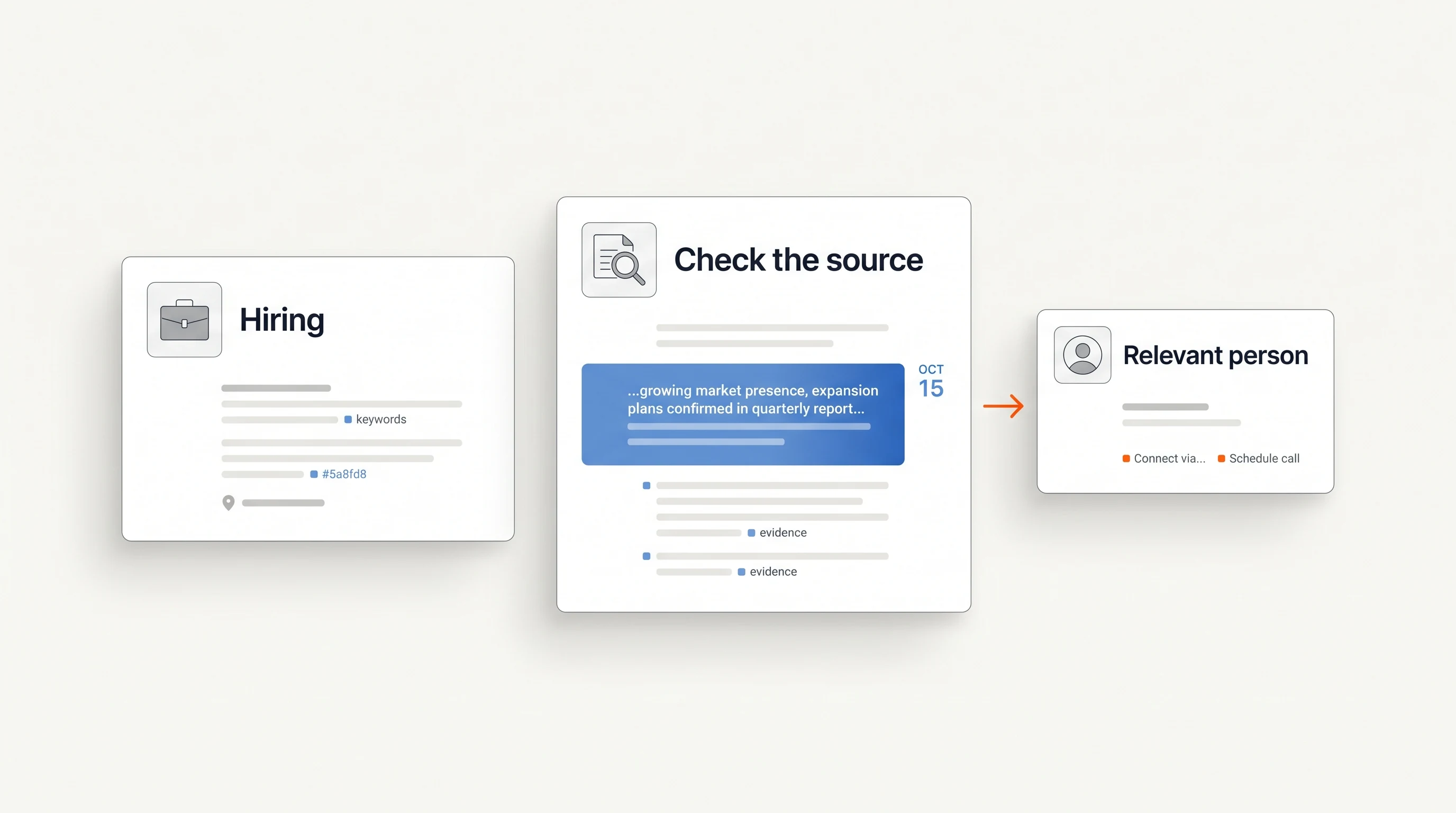
Imagine a fictional B2B company, Northstar Example, recruiting an onboarding manager and two customer success specialists. You sell a tool for documenting customer handoffs. The postings are relevant because they describe work your tool may support; they do not establish that handoffs are failing.
A useful research note would read: “Three distinct customer-facing openings are active on the company careers site. The onboarding role includes coordinating implementation handoffs. The responsible leader and current handoff process need confirmation.” An ungrounded note would claim the company is losing customers because its onboarding cannot scale.
The next step is to identify the person responsible for that work and ask a question about the process. See the signal-based email templates for ways to turn a verified observation into a short opener.
Download the signal library
Download the 12-signal library as a CSV. It includes the observation, what it supports, the missing information and a suggested next step. Open it in your spreadsheet and add the source and owner for the signals you can actually access.
Book a demo to discuss a hiring-signal workflow for your offer, or use the campaign scorecard to plan how you will evaluate it.
Where Perpetual fits
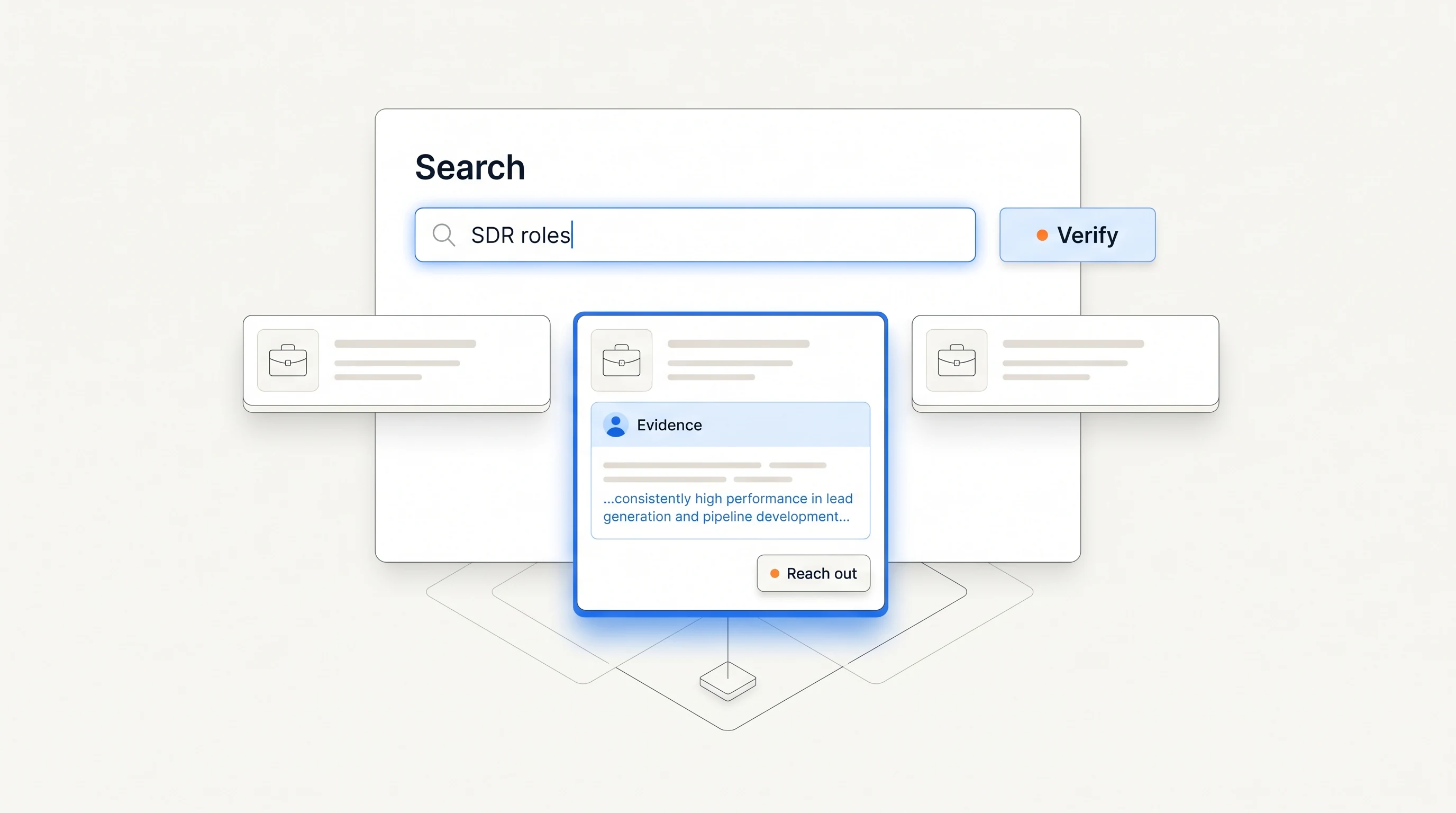
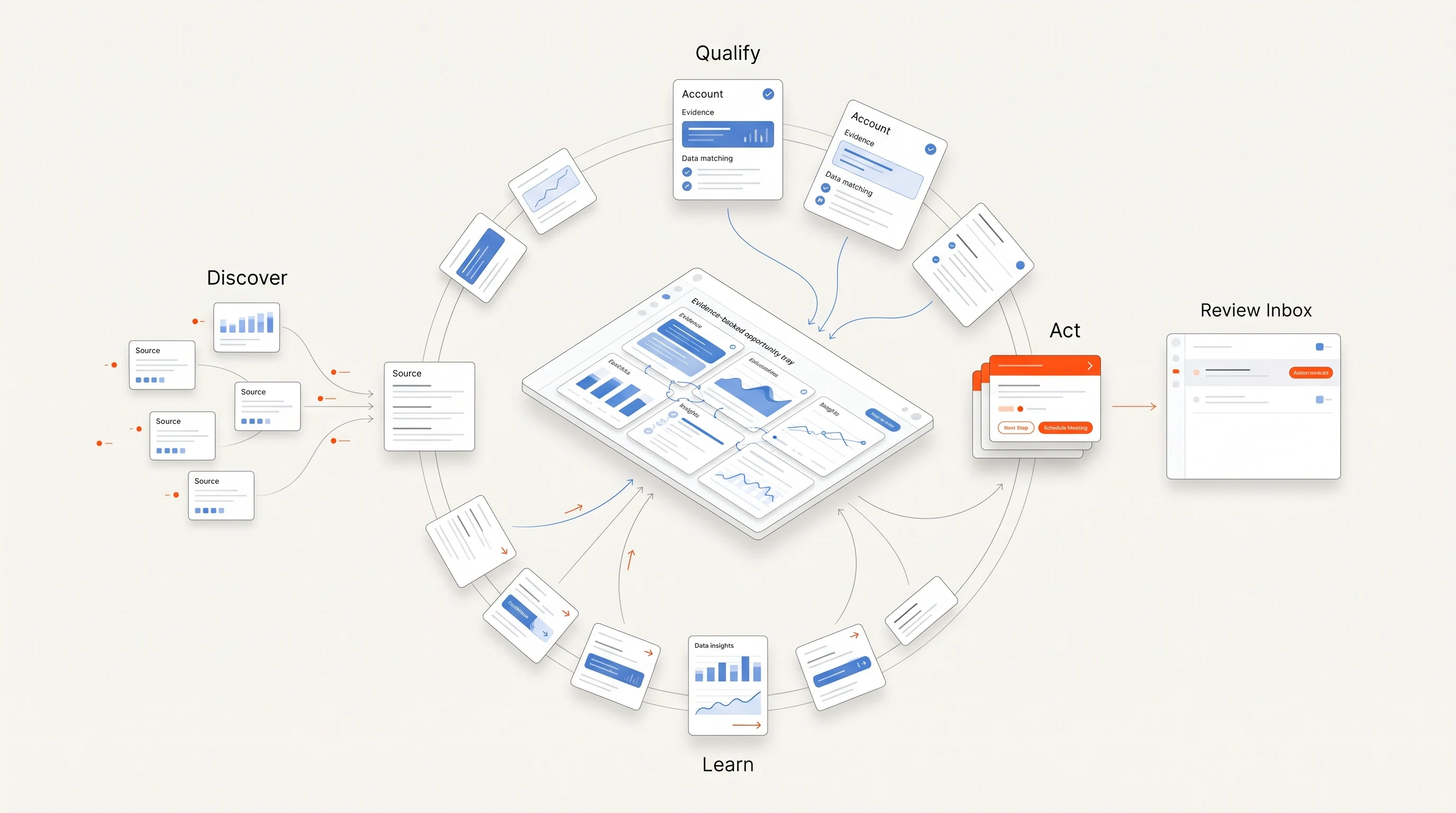
Perpetual is a signal-based outbound tool for founders and B2B sales teams. Its current pipeline starts with one kind of signal from this library, public hiring activity: it qualifies companies against your offer, selects a relevant person with an explanation and prepares outreach grounded in the evidence. Each opportunity states what its evidence does not prove. Completing campaign setup authorizes automatic email within your saved sending policy; you can inspect activity and pause any campaign. Email replies and opt-outs stop follow-ups, and LinkedIn steps are manual tasks. The quickstart guide shows the setup.
Frequently asked questions
Is a hiring signal the same as purchase intent?
No. A job posting tells you what the company says it wants someone to do. Purchase intent needs further evidence from the buyer or an actual evaluation process. The posting may justify research and a relevant question.
Which buying signal is strongest?
A direct request tells you more about interest in your offering than an unrelated public event. Beyond that, choose signals using your offer and your own observed outcomes. There is no conversion ranking in this guide.
Where can a small team start?
Choose one accessible source and one narrow account segment. Record the reason each account is relevant, then review both successful and rejected examples before expanding.
Further reading: Common Room's buying-signal guide covers a broader range of signal sources. The examples, worksheet and research process here were written for this Perpetual guide.