Skip to content

JournalSignalsNo. 04

Hiring Signals by Role: What 12 Job Postings Tell Sellers

Hiring signals by role: what 12 common job postings suggest, which offers they fit, who to contact first and what each posting does not prove.

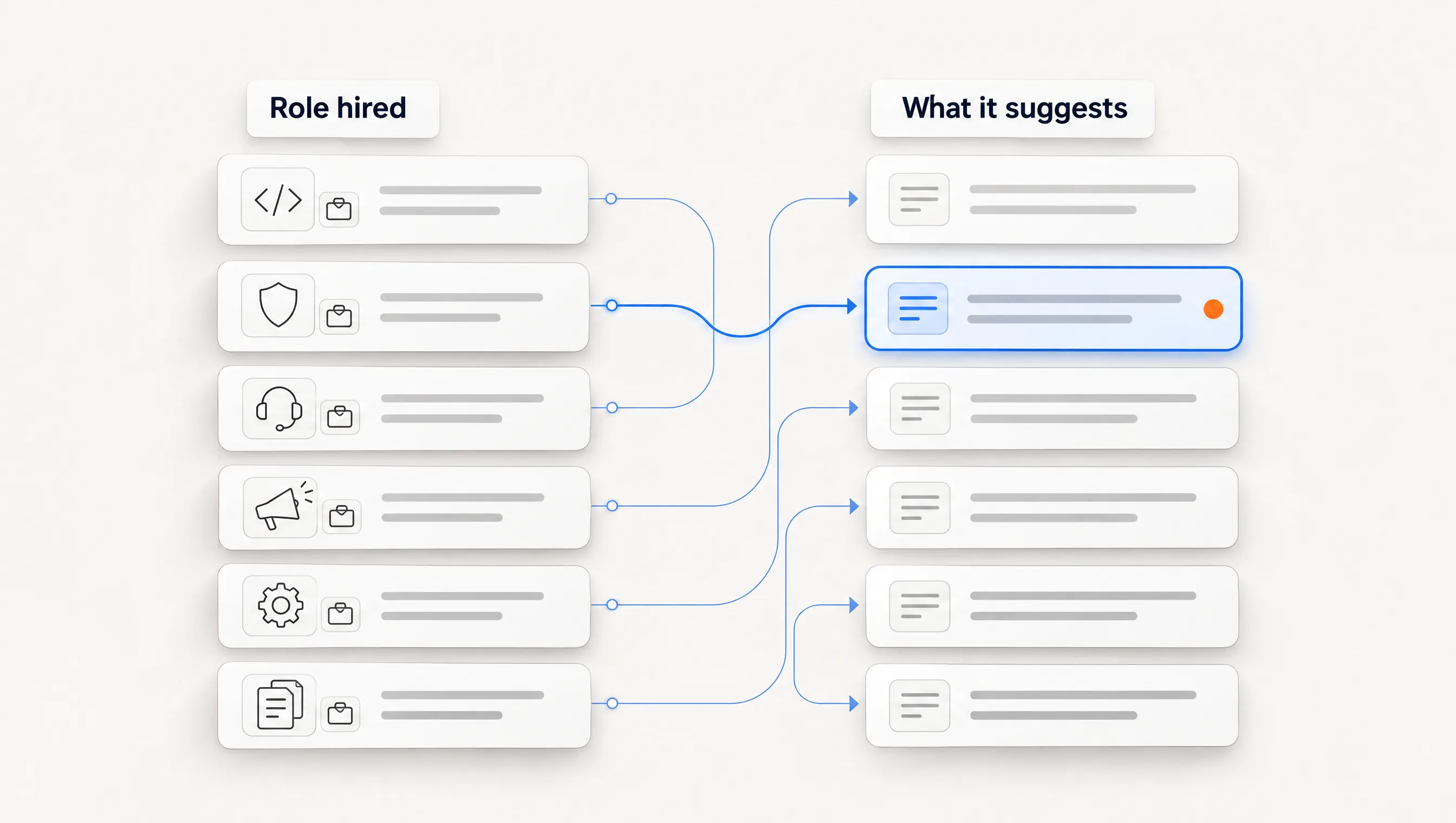
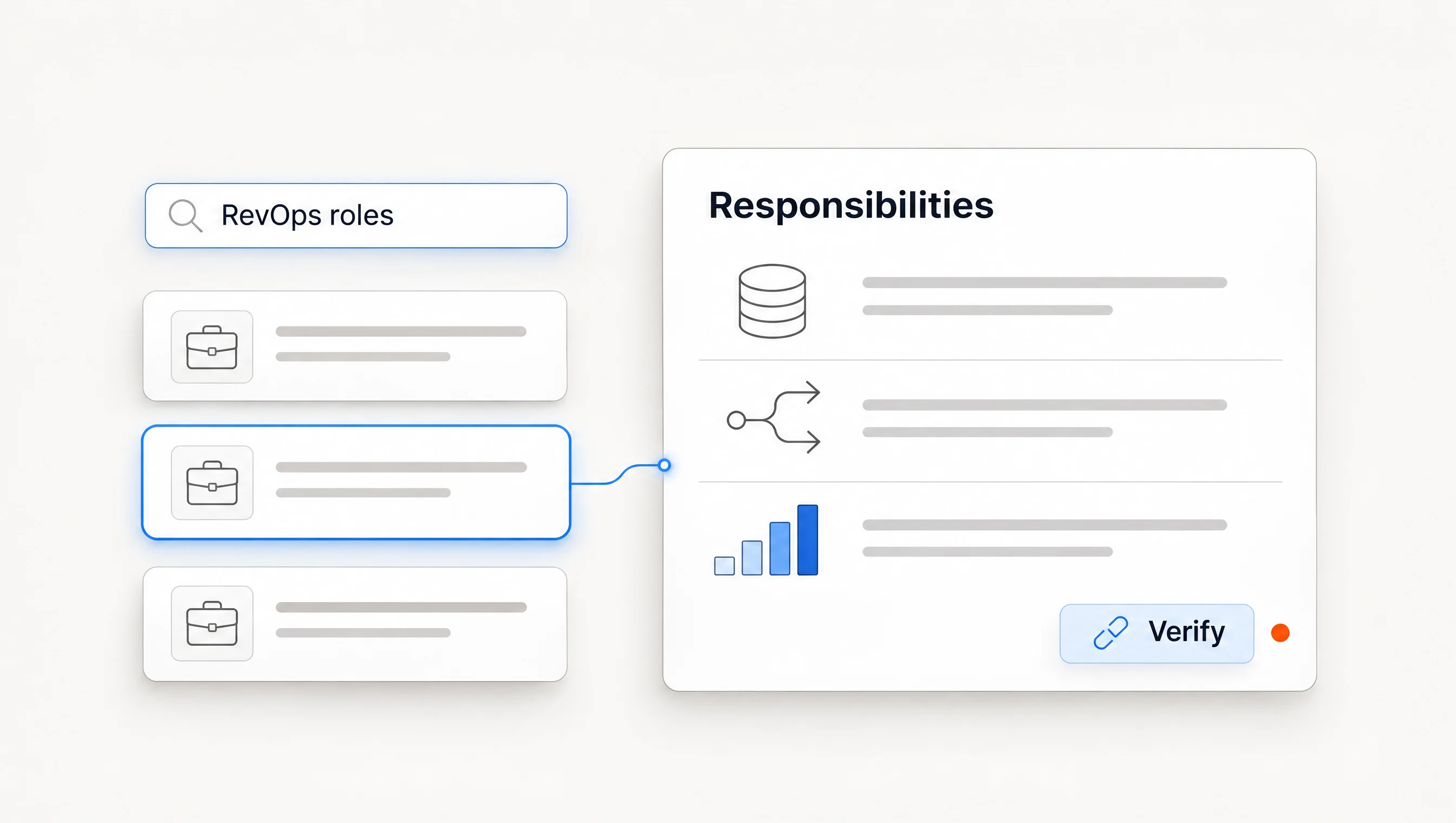
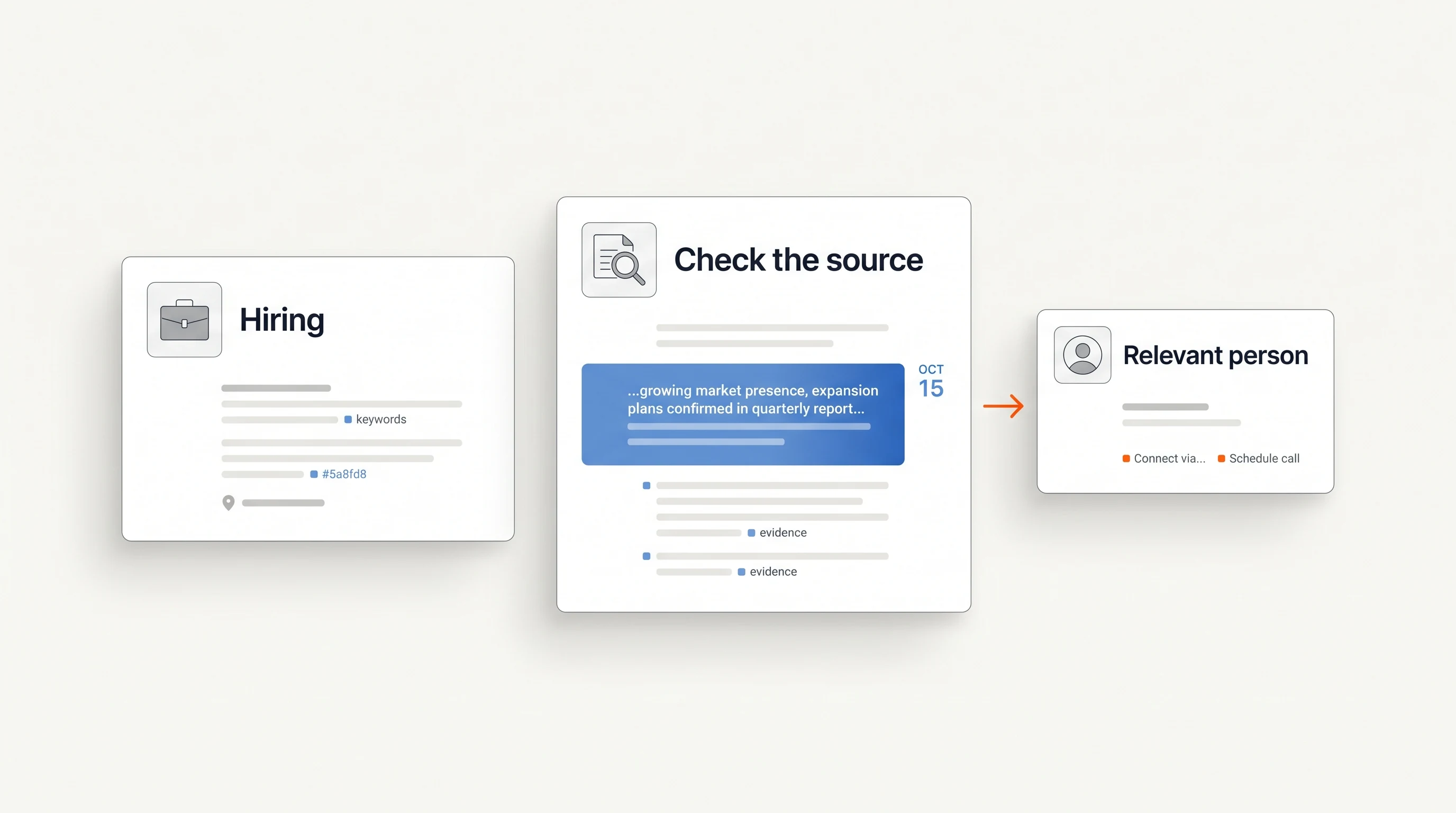
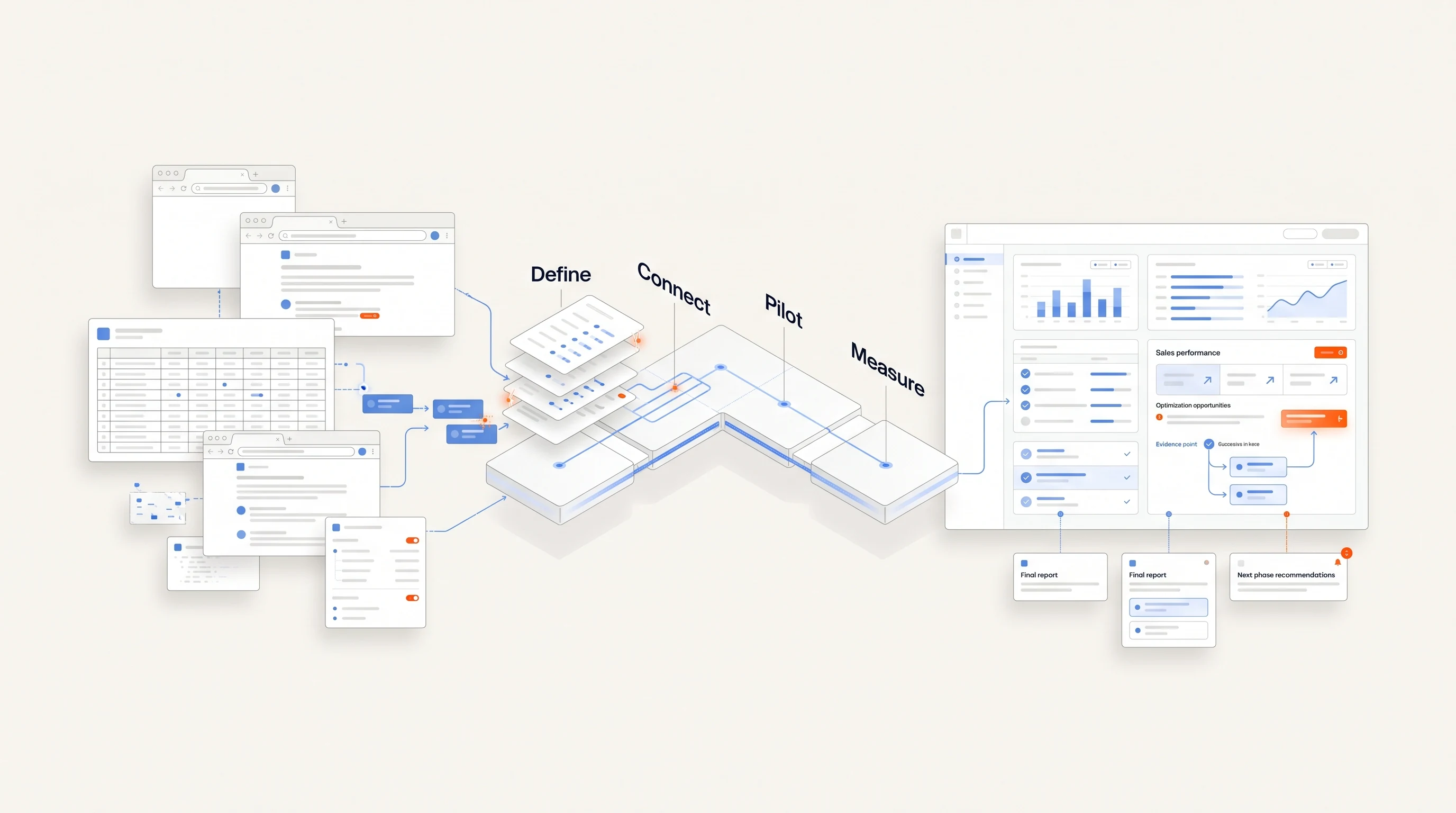
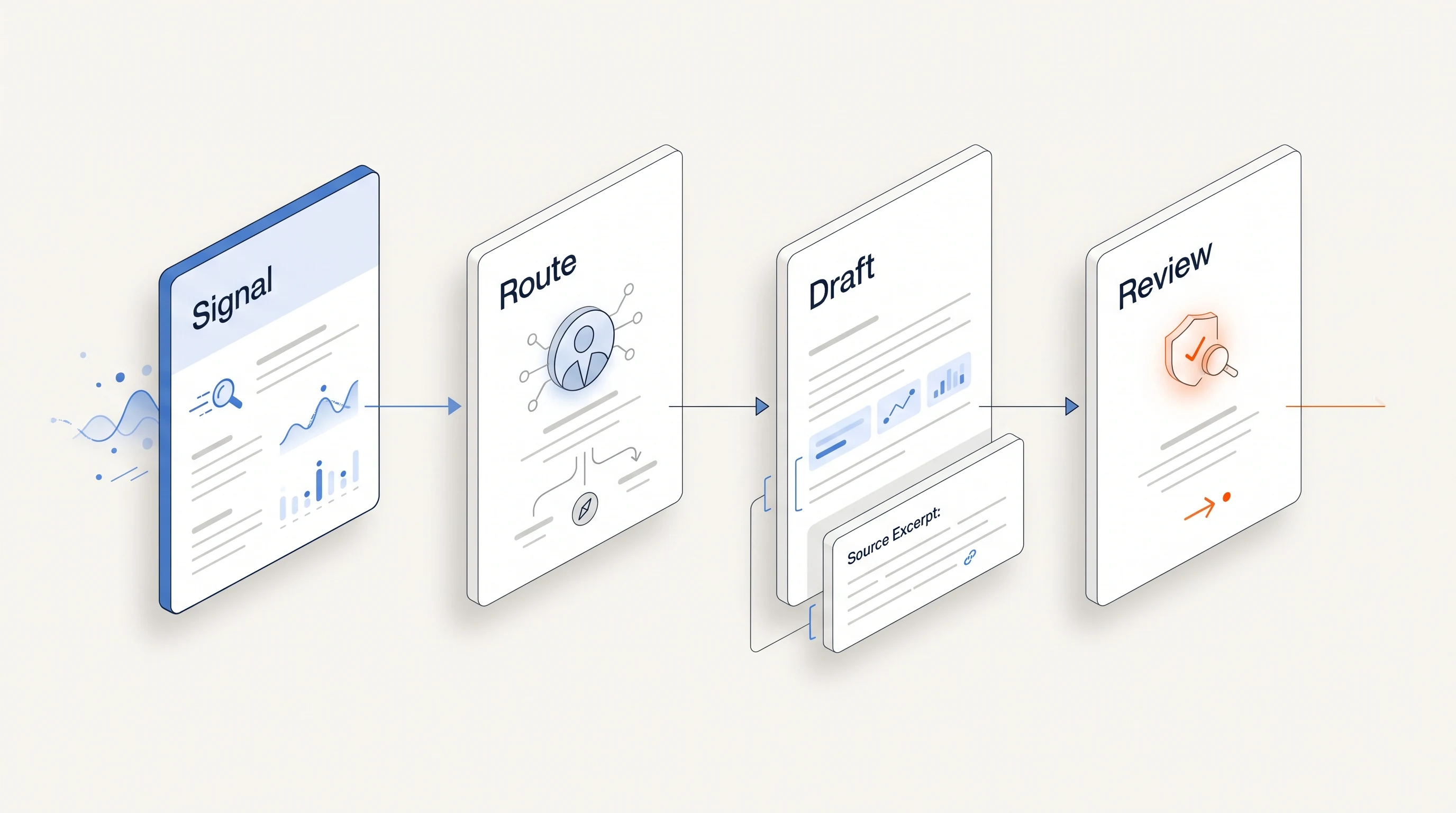
Job postings for different roles connect to what each one may suggest.
Contents
  1. 01How to read a role as a signal
  2. 0212 postings and what they signal
  3. 03What to look for in the posting
  4. 04Turn the role into a message
  5. 05Where Perpetual fits
  6. 06Frequently asked questions

Published by Perpetual

Hiring signals by role tell sellers which work a company is investing in: the role decides which offers it is relevant to. A company hiring SDRs may need prospecting data or sales training; one hiring its first security engineer may need compliance tooling; one hiring a controller may be formalizing its finance stack. This guide maps 12 common roles to the offers they may be relevant to, the first person to contact and what the posting does not prove.

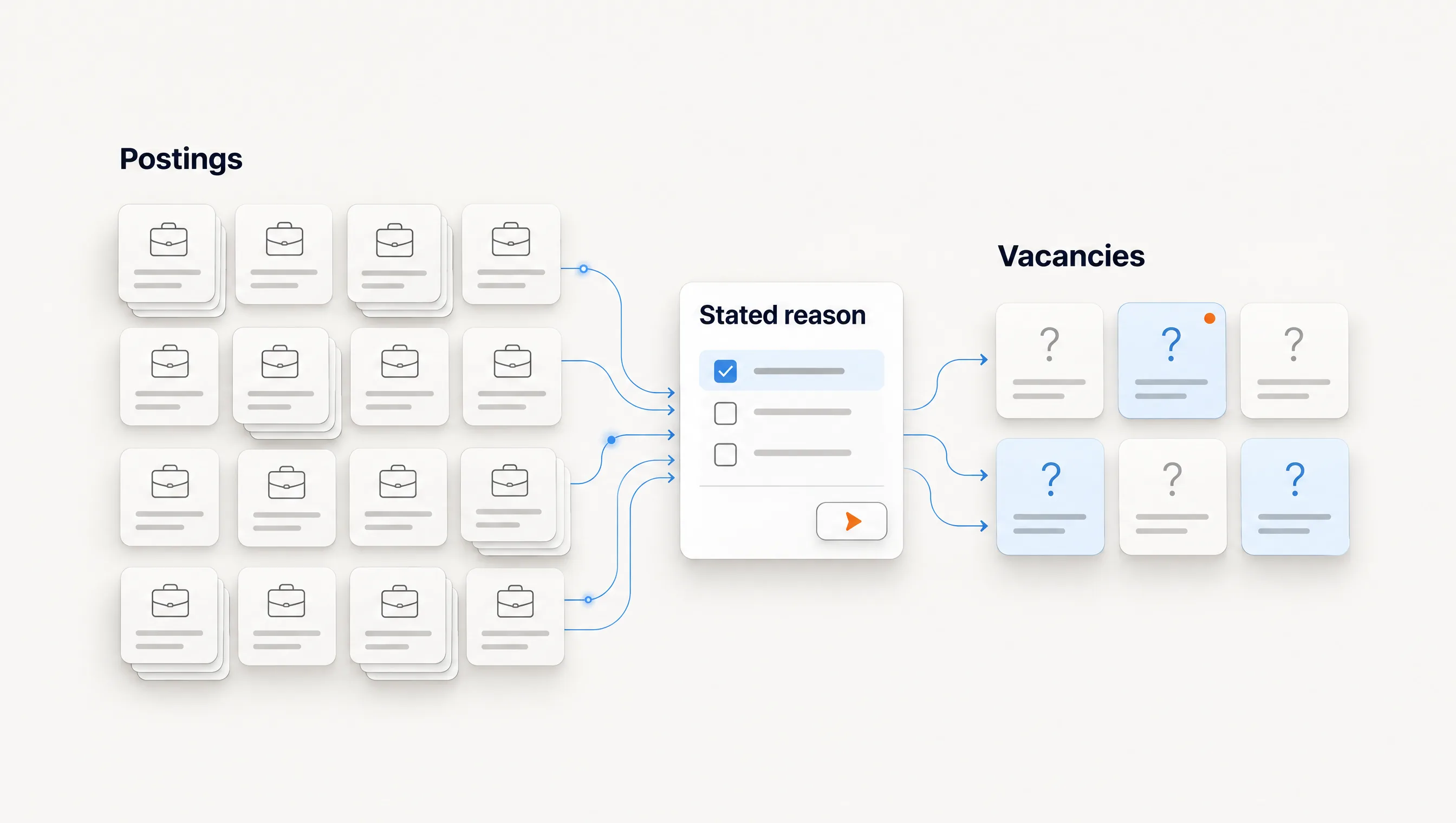
Every row is a hypothesis to check in the posting's actual responsibilities, not a buying signal by itself. In our sample of 2,039 postings, sales roles were 16.7% of postings and engineering 10.3%, while 23.5% fell into no common function at all. Titles are too varied to classify reliably, so filter by responsibilities, not by title alone.

How to read a role as a signal

  1. Read the responsibilities, not the title. “Operations manager” can mean anything; the description tells you what the person will own.
  2. Note first-of-kind roles. A first hire in a function often means a new budget area and new tools, but only when the posting says so or the team clearly does not exist yet.
  3. Count distinct vacancies. One role listed in several cities is often one hire.
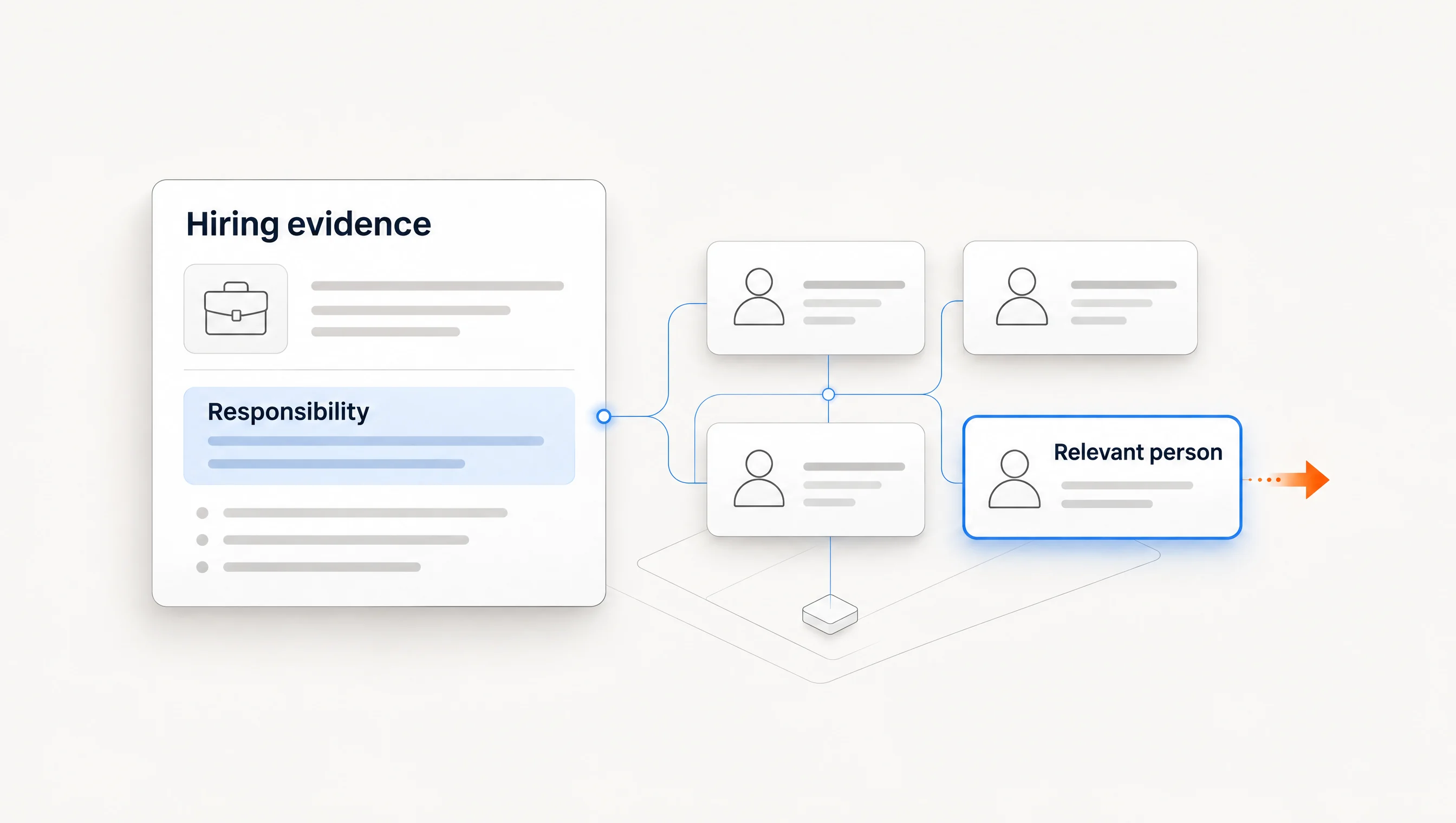
  4. Contact the current owner. The person being hired is not there yet. Write to whoever owns the work today.

12 postings and what they may signal

Role being hiredMay be relevant toFirst contactWhat it does not prove
SDRs or BDRsProspecting data, sales training, outbound tools, recruitingHead of sales or SDR managerThat they lack tools or will buy new ones
First account executiveCRM setup, sales process consulting, sales recruitingFounder or CEOThat a sales budget exists beyond the hire
RevOps or sales operationsCRM implementation, data quality, routing and reporting toolsHead of sales or current ops ownerThat they will replace their CRM
Sales enablementOnboarding, training and content toolsSales leaderThat onboarding is currently failing
Demand generation or marketing opsMarketing automation, ads, attribution, agenciesHead of marketingThat the marketing budget is growing
Customer successSupport, onboarding and retention toolsHead of customer success or COOThat churn is a problem
Data engineer or analystData warehouse, BI and integration toolsHead of data or engineering leadWhich stack they will choose
Security or complianceCompliance automation, security tools, audit servicesCTO or head of securityThat an audit is scheduled
DevOps or platform engineerCloud, monitoring and infrastructure toolsEngineering leadThat they are migrating anything
Controller or finance leadAccounting, billing and spend tools, fractional financeCFO or CEOThat the current system is being replaced
Recruiter or people leadApplicant tracking, HR software, employer brandingHead of people or COOHow many roles they will open
Any role in a new country or city (not a multi-city copy of one vacancy)Local legal, payroll, office and recruiting servicesFunctional leader for that regionThat expansion is approved beyond the role

Download the role-to-offer map (CSV), with columns for your own offer, the evidence to look for in the posting and the question to ask.

What to look for in the posting

The table gives a starting hypothesis. The posting decides whether it holds. Look for:

  • Named tools or systems the person will use or replace, which shows the current stack but not dissatisfaction with it.
  • Words like “first,” “build” or “establish”, which suggest a new function, though growth language is sometimes about the candidate rather than the company.
  • Reporting line, which points to the current owner.
  • Scope and team size, which tell you whether this is one hire or a team being built.

If the responsibilities do not connect to what you sell, skip the company, however good the title looks. Our guide to finding decision-makers with hiring signals shows how to pick the first contact in detail.

Turn the role into a first message

Name the role and one responsibility from the posting, connect it to a specific problem you help with, and ask a question the reader can answer. An illustrative example with invented details:

Your posting for a first RevOps manager mentions cleaning up lead routing in HubSpot. Until that person starts, who owns routing today? We help teams map routing rules before a new hire inherits them.

Do not state why the company is hiring unless the posting says so. Our signal-based email templates show more examples, and the deeper guides on companies hiring SDRs and companies hiring RevOps leaders cover two of these roles step by step.

Where Perpetual fits

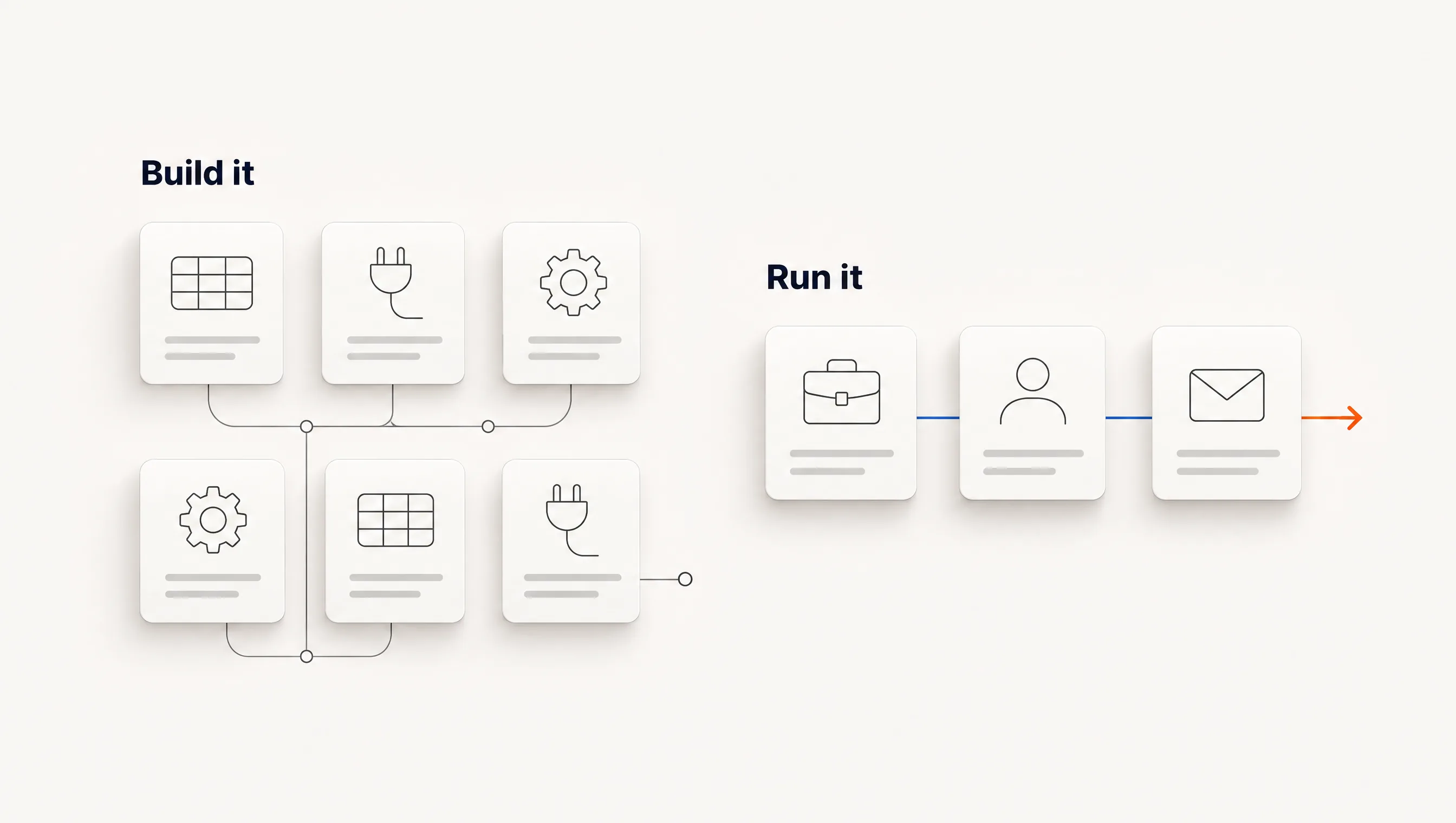
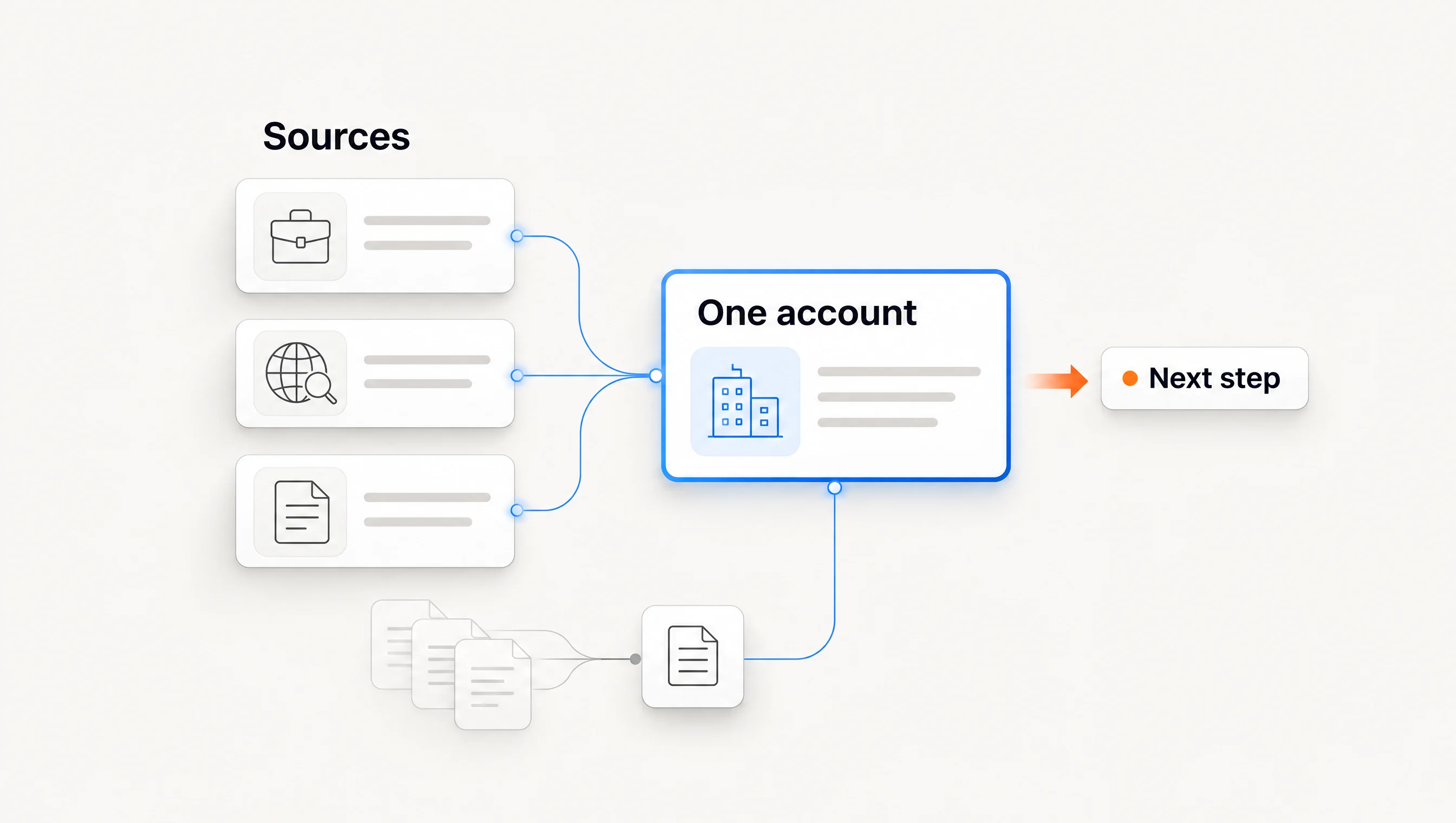
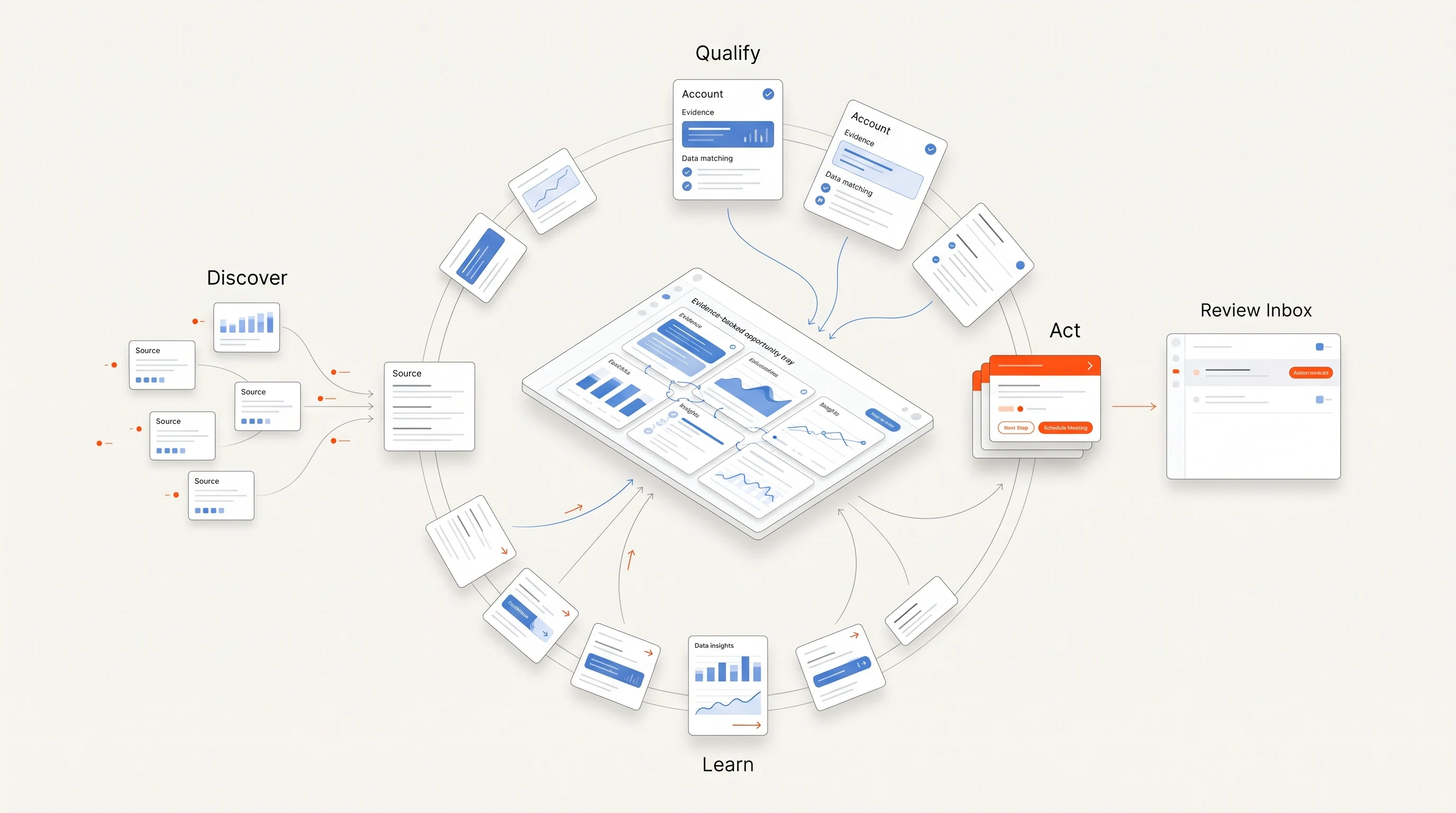
Perpetual reads public job postings, matches their responsibilities against your offer, qualifies the company, selects one current contact with a reason and writes a first message from the posting. You describe which roles matter for your offer; the product does not assume every hire is a buying signal. It covers companies that publish roles on public job boards it can read. See the quickstart guide.

Frequently asked questions

Which job postings are the strongest buying signals?

Roles whose responsibilities match the problem you solve, and a first hire in a function when the posting confirms the team is new. The title alone is a weak signal.

Should I contact the person being hired?

Not yet. They have not started. Contact the person who owns that work today, and consider the new hire later.

Does a company hiring mean it has budget for my product?

No. It shows investment in a function. Whether there is budget for outside help is what your first conversation finds out.

How do I find companies hiring for a specific role?

Search company careers pages and public job boards for the role and check each posting at its source. Our hiring signal tools comparison covers tools that do this at volume.
Keep reading51 more
01

ZoomInfo Alternatives for Small B2B Teams: Prices Checked

Compare ZoomInfo alternatives for small B2B teams by published price, price per credit and what a credit buys. Includes a 20-person data test.

Evaluation7 min read
02

Pay Per Lead vs. Subscription vs. Pay Per Result: Outbound Pricing Models

Pay per lead vs subscription vs pay per result: who carries the risk, what counts as a lead, what you keep, and a free checklist to compare offers.

Evaluation6 min read
03

How Many Follow-Up Emails Should You Send? Timing and Stop Rules

How many follow-up emails to send in cold outreach, how far apart, what each should add and when to stop, with exact rules and a free planner.

Outreach5 min read
05

How Staffing Agencies Find Clients Using Job Postings

Find staffing agency clients through job postings: which roles to pursue, who owns the hire, what to say first, and a free client research sheet.

Research8 min read
06

How to Build an ICP for B2B Outbound, Even With Few Customers

Build an ICP for B2B outbound as a testable hypothesis, even with few customers. Criteria, persona, unknown data and a free ICP worksheet.

Research7 min read
07

How to Scale Cold Email Without Burning Your Domain

Scale cold email without burning your domain: Google, Yahoo and Microsoft rules, mailbox ramp-up, sending caps, stop rules and a free planner.

Outreach7 min read
08

Unify Alternatives: 6 Options Compared on Price and Fit

Compare six Unify alternatives on price, fit and sending model, with Unify's own pricing checked November 16, 2026, and when to stay with it.

Evaluation6 min read
09

Pipeline Generation Tools: How to Choose by the Job You Need Done

Five types of pipeline generation tools, the outbound steps each covers, how to find your bottleneck and a 30-account pilot worksheet.

Evaluation7 min read
10

Intent Data Tools: 4 Source Types and How to Test Them

Compare intent data tools by source: first-party, publisher co-op, review site and public events. Includes a 25-account accuracy test worksheet.

Signals7 min read
11

The GTM Tech Stack for a Small B2B Team, Stage by Stage

Which go-to-market tools a small B2B team needs at each stage, what to skip, and how to audit handoffs. Includes a free stack audit worksheet.

Evaluation6 min read
12

Account Discovery vs. Account Monitoring: Which Do You Need?

When to find new accounts and when to watch the ones you own, how to split seller capacity between both, and a weekly routine with a free worksheet.

Signals6 min read
13

Best Hiring Signal Tools for B2B Sales: 6 Options Compared

Compare six hiring signal tools by source, published price and the work each leaves to your team. Includes a free 20-company test worksheet.

Evaluation9 min read
14

What Signal-Based Outbound Really Costs: 5 Stacks Priced Line by Line

Five outbound stacks priced from public pricing pages for 500 contacts a month, with human time, plan limits and a free cost worksheet.

Evaluation8 min read
15

Clay Alternatives for Teams Without a GTM Engineer

Choose a Clay alternative by the job you need done. One hiring workflow mapped across five options, plus when you should stay with Clay.

Evaluation7 min read
16

What 2,039 Job Postings Tell Sellers, and What They Can't

Original data from 2,039 public job postings: 14% of rows were duplicates, and 97.6% of vacancy motives remained unknown. Methods and limits explained.

Research8 min read
17

Signal Stacking for B2B Sales: 5 Plays You Can Build

Combine independent buying signals into a clear account decision. Five practical plays, a worked example and a free signal-stacking CSV worksheet.

Signals9 min read
18

How to Find Decision-Makers Using Hiring Signals

Use job responsibilities and reporting lines to find a relevant first sales contact. Includes six scenarios, three examples and a free contact-selection matrix.

Research9 min read
19

How to Find Companies Hiring RevOps Leaders

Find and qualify companies hiring RevOps leaders through current job postings. Reusable searches, mandate checks and a free prospecting worksheet.

Research8 min read
20

AI SDR vs. Sales Automation: What Does Your Team Need?

Compare AI SDRs and sales automation across eight outbound jobs, operating cost and human ownership. Includes a four-week pilot and a free CSV worksheet.

Evaluation10 min read
21

Best Buying Signal Tracking Platforms in 2026: How to Compare Them

Compare buying signal platforms by account events, people changes, topic intent and workflow tools, with a checklist and a two-week test.

Evaluation9 min read
22

What Is Signal-Based Prospecting? Definition, Six Signals and a Weekly Workflow

What signal-based prospecting is, six signals to track, what each cannot prove, and a weekly workflow from observation to grounded outreach.

Signals8 min read
23

AI-Powered Go-to-Market Platforms for B2B SaaS Pipeline Generation: What to Compare

Compare AI GTM platforms for B2B SaaS: four categories, limits on AI decisions, sending controls and questions to ask before buying.

Evaluation7 min read
24

Sales Intelligence Tools for B2B Teams With Long Sales Cycles

What to look for in sales intelligence tools when deals take months: change tracking, history, multiple contacts, re-open triggers and a 90-day test.

Evaluation8 min read
25

12 Buying Signal Examples and What to Do Next

A practical buying-signal library: what each observation supports, what remains unknown, and the next step to take. Includes a free CSV worksheet.

Signals8 min read
26

How to Use Hiring Signals for Sales Prospecting

Turn public job postings into a focused prospecting play: check account fit, verify the evidence, find the responsible person and write a relevant opener.

Research8 min read
27

4 Signal-Based Cold Email Templates You Can Adapt

Original cold email templates for relevant hiring, new responsibilities, expansion and useful follow-ups. Includes source checks and a free CSV download.

Outreach7 min read
28

How to Measure Signal-Based Outbound: A Campaign Scorecard

Measure account selection, positive replies, qualified meetings held and total cost with clear denominators. Includes a free account-level CSV worksheet.

Research8 min read
29

Job Postings as Buying Signals: What They Tell You

Which job postings matter for which offer: clustered roles, a first hire in a new function or a reposted role, and what a posting does not prove.

Signals10 min read
30

Hiring Signals vs. Intent Data: What Each Shows

Where hiring signals and third-party intent data come from, how fresh and checkable each is, and when to use one, the other or both.

Signals9 min read
31

How to Find Companies Hiring SDRs (and When to Reach Out)

Find companies hiring SDRs on careers pages, job boards and LinkedIn Jobs, judge each posting, and decide whom to email and when.

Research9 min read
32

CRM vs. Dedicated GTM Automation Platform: Which Do You Actually Need?

Compare CRM and GTM automation by the work each owns, the gaps in your stack and the integration rules that connect them.

Evaluation8 min read
33

How to Evaluate a GTM Automation Vendor's Approach to Intent Signals

A checklist for evaluating how a GTM automation vendor sources, qualifies and acts on intent signals, and how to test it on your own data before you buy.

Evaluation7 min read
34

Using Signal Data to Optimize Paid Acquisition Campaigns

Use conversion values, clean events, B2B pipeline stages and account observations to guide paid acquisition and targeting.

Signals8 min read
35

When to Bring In CRM and GTM Integration Experts

When to hire CRM and GTM integration help, which specialist fits the problem, and what to settle before bringing one in.

Evaluation6 min read
36

Account Data Management: What Sales Teams Should Evaluate Before Buying

Evaluate account data software with checks for accuracy, freshness, ownership, integration, missing data and change tracking.

Evaluation6 min read
37

Signal-Based Prospecting for Enterprise RevOps Teams With Complex Deal Cycles

How enterprise RevOps teams use buying signals to reach accounts before the RFP, keep them out of open deals, reach the buying group and measure pipeline.

Signals8 min read
38

How to Automate Acting on Buying Signals to Move Deals Forward

How to automate acting on buying signals: a playbook per signal type, what stays human, routing, drafting from evidence and a four-week rollout.

Outreach8 min read
39

Real-Time Buying Signal Detection: How to Evaluate Go-to-Market Platforms That Make It Core

What real-time buying signal detection means per signal family, how fresh each should be, and how to tell a core capability from a bolt-on feature.

Signals8 min read
40

Go-to-Market Platforms That Integrate With Your CRM and Marketing Automation: What to Check Before You Buy

Evaluate GTM integration with your CRM and marketing tools: field ownership, read and write rules, suppression and a one-week test.

Evaluation8 min read
41

Sales Automation Platforms With Fast Implementation: How to Get Live in Weeks, Not Quarters

What makes sales automation slow to implement, what fast implementation looks like, questions to ask before you sign, and a four-week plan to go live.

Evaluation6 min read
42

Revenue Automation Platforms for Mid-Market Teams Pursuing Continuous Opportunity Discovery

A practical guide to revenue automation platforms that help mid-market teams find opportunities continuously, act on signals, and move deals forward.

Evaluation3 min read
43

Unified Go-to-Market Platforms: Combining Signal Detection and Deal Progression

What unified go-to-market platforms are, how they combine signal detection with deal progression, and what to look for when evaluating them.

Signals3 min read
44

Affordable Signal-Based Pipeline Generation Tools for Bootstrapped Startups

Compare manual watchlists, TheirStack, Unify and PredictLeads with checked entry prices, limits and the work a startup still needs to do.

Evaluation4 min read
45

Migrating From Manual Prospecting to an Automated Signal-Based Go-to-Market System

How to move from manual prospecting to an automated signal-based go-to-market system: what changes, the stages, the data work and the pitfalls.

Signals3 min read
46

Choosing go-to-market automation for a small sales team with no ops function.

A small team needs fewer moving parts, not more dashboards. Four questions to decide what to automate and what to keep in human hands.

Evaluation3 min read
47

Signal-based prospecting for startups that need predictable pipeline.

Volume outbound makes pipeline feel random. Prospecting against observable buying moments gives a startup a steadier rhythm, if the signals are checked first.

Signals3 min read
48

Tools That Help Sales Development Teams Prioritize High-Intent Accounts Without Manual Research

Evaluate SDR tools by the research they remove, the evidence behind account rankings, contact quality and the work left for your team.

Evaluation4 min read
49

Evaluating Customer Support and Track Record in Signal-Based Sales Platforms

How to evaluate customer support and track record when you compare signal-based sales platforms, from reference calls to CRM sync and time-to-first-signal.

Signals13 min read
50

A signal is not a buying intent.

A new hire tells you something changed. It does not tell you someone is ready to buy. Better outbound starts with that distinction.

Signals2 min read
51

What belongs in a lead brief?

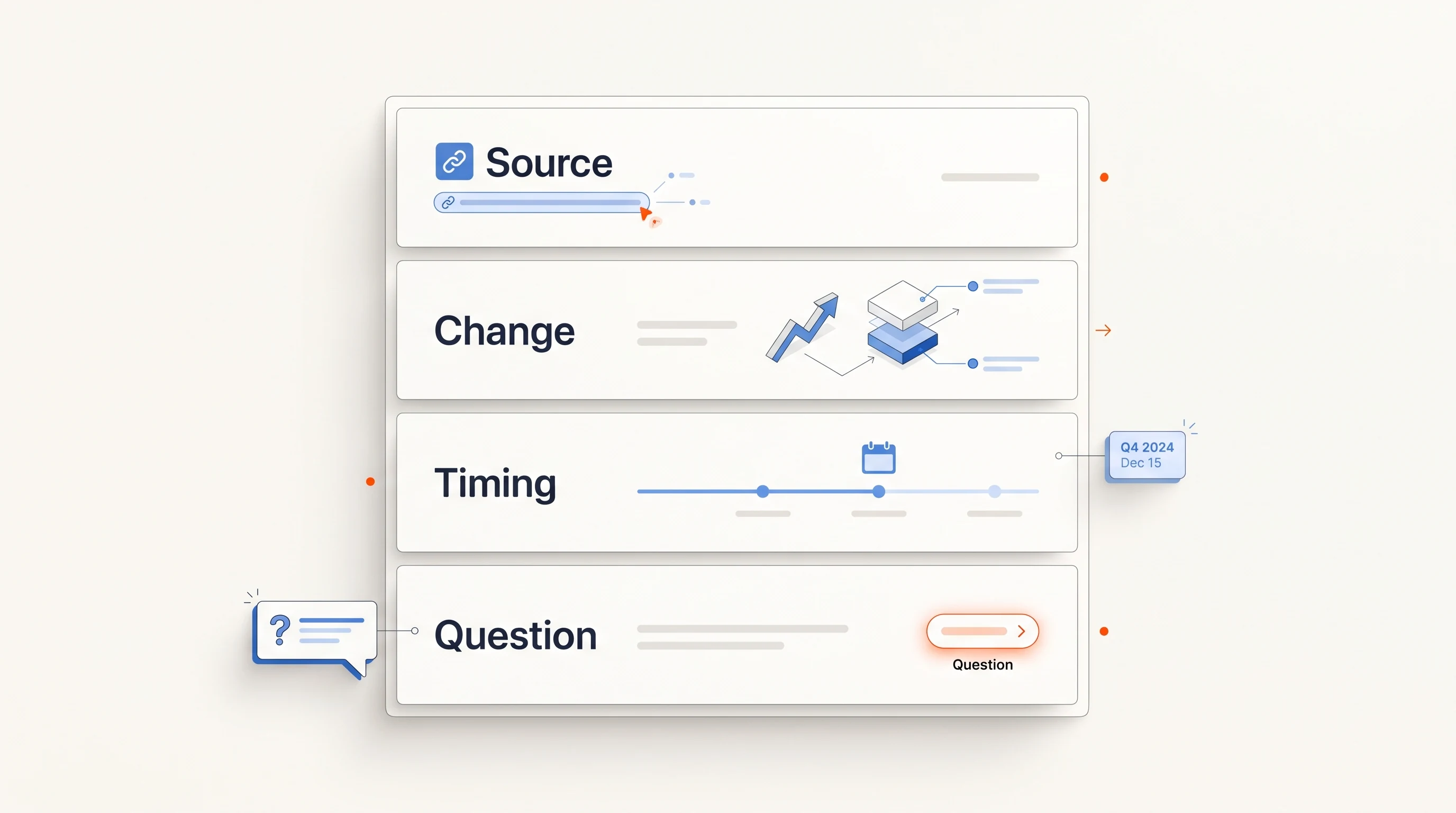
The source, the change, the timing, and the unanswered question. A small brief that makes an outbound decision easier to review.

Research2 min read
52

Write the question before the pitch.

A practical way to turn account research into an opener that earns a conversation without overstating what you know.

Outreach2 min read

Put your GTM in perpetual motion.

Get started

Sending stays within the limits you set, and you can pause it any time.
Hiring Signals by Role: What 12 Job Postings Tell Sellers