Skip to content

JournalOutreachNo. 03

How Many Follow-Up Emails Should You Send? Timing and Stop Rules

How many follow-up emails to send in cold outreach, how far apart, what each should add and when to stop, with exact rules and a free planner.

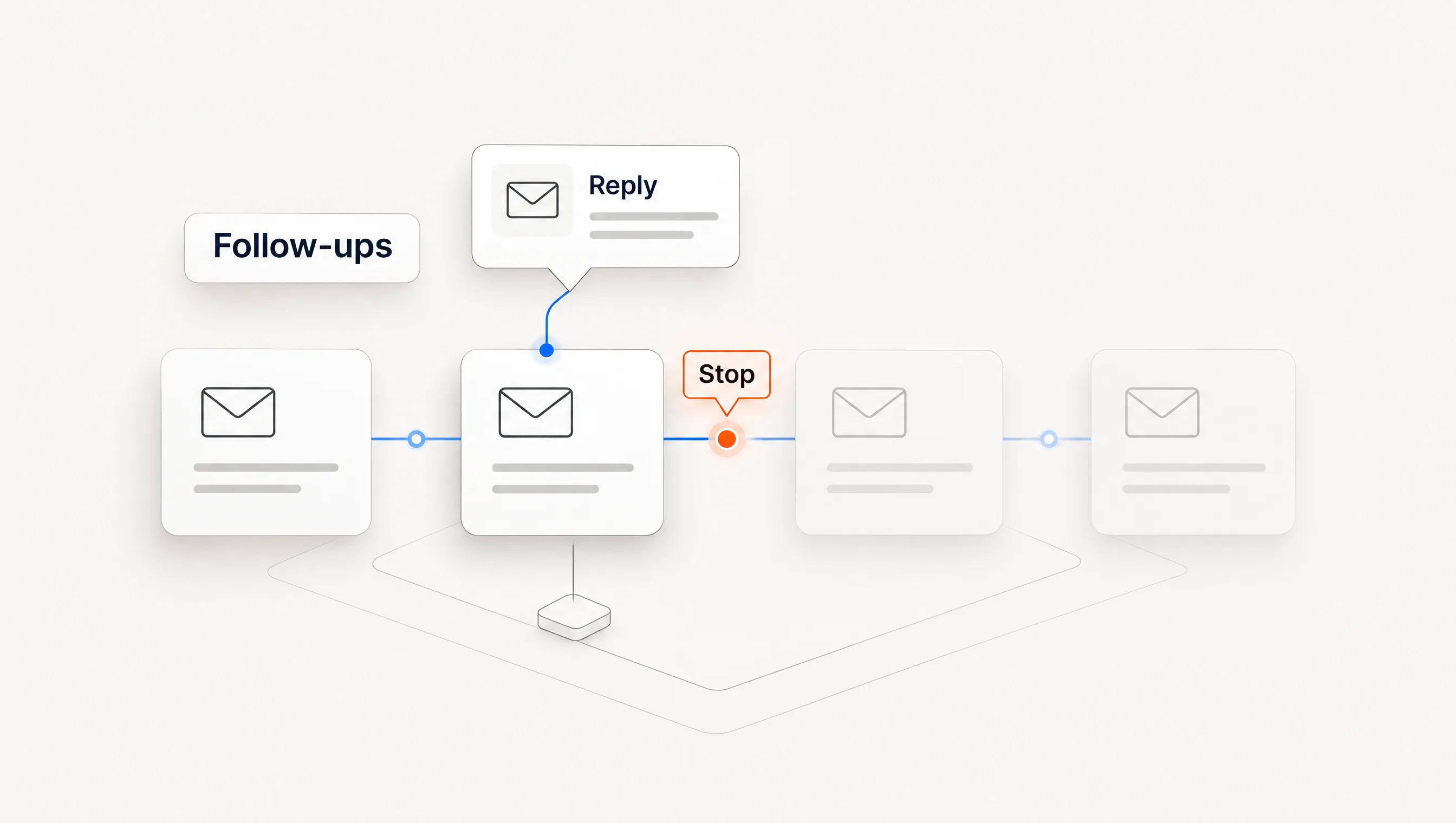
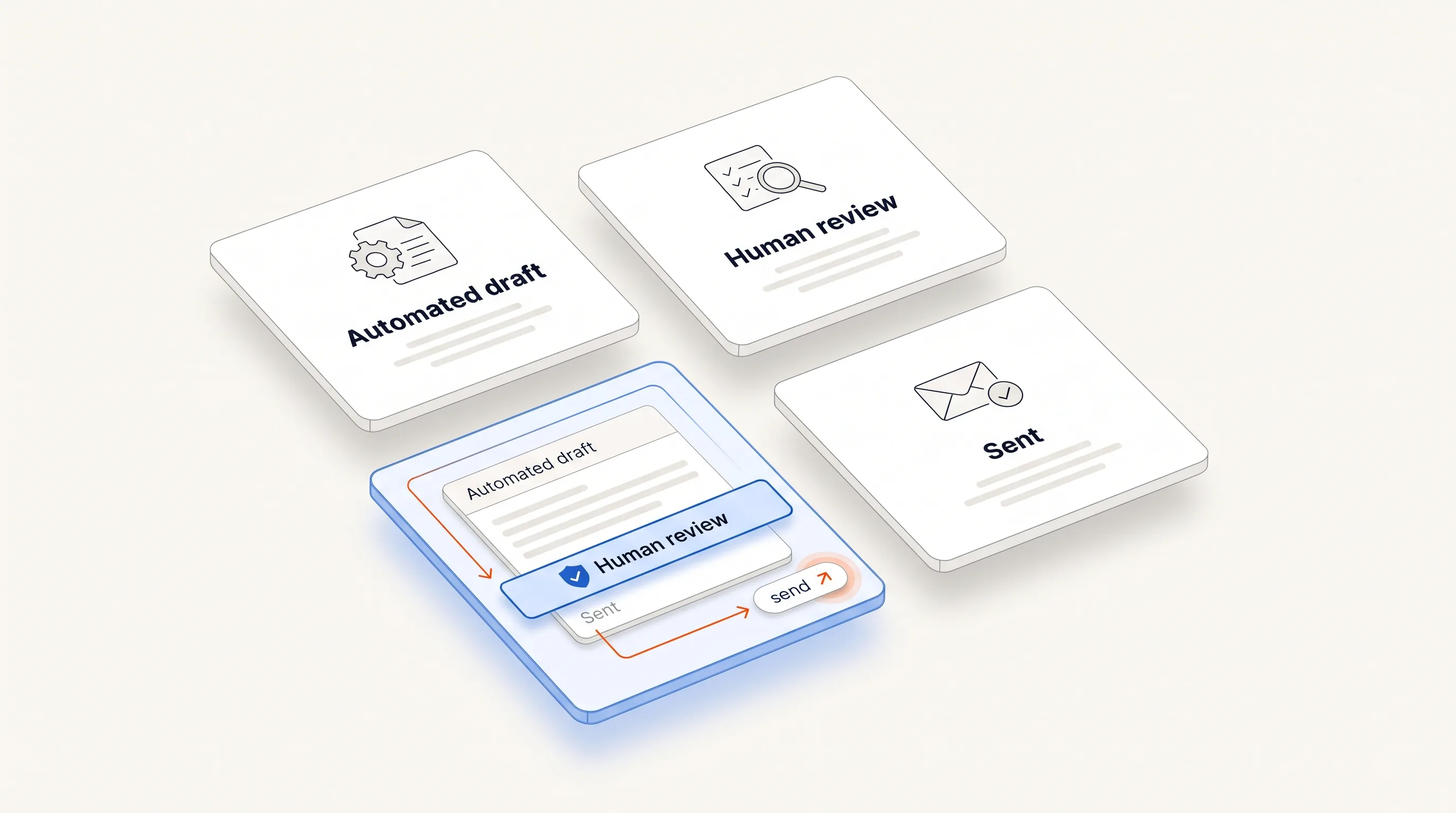
A sequence of follow-up emails stops when a reply arrives.
Contents
  1. 01How many follow-ups to send
  2. 02How far apart
  3. 03What to put in each
  4. 04When to stop
  5. 05Measure replies by step
  6. 06Where Perpetual fits
  7. 07Frequently asked questions

Published by Perpetual

How many follow-up emails should you send? Two after your first cold email, three at most: the first about a week later and the next about two weeks after that, each adding something the earlier emails did not. Stop at once when the person replies, opts out or bounces, and pause when they are out of office. More follow-ups mostly add risk: every extra email to someone who has not answered is another chance to be marked as spam.

This guide explains how many follow-ups to send, how far apart, what to put in each and when to stop, using the rules Perpetual applies to every sequence as a concrete example. Those are our defaults, not universal truths, and we do not publish reply-rate claims we have not measured.

How many follow-up emails to send

A short sequence is easier to keep relevant and safer for your domain. Perpetual's default is a first email and two follow-ups, and no sequence may have more than four steps in total.

StepWhenPurpose
1. First emailDay 0The specific reason you are writing and one question
2. Context follow-upAbout day 7One new, relevant piece of context
3. Close the loopAbout day 21A short, easy way to say no or point to someone else

Why stop there? If a first email and two follow-ups with new information get no answer, a third or fourth usually means the timing or the person is wrong. Change the person, the reason or the offer instead of adding more emails. Complaint rates matter too: the bulk-sender requirements of Google and Yahoo set 0.3% as the maximum spam complaint rate, as our guide on scaling cold email without burning your domain explains.

How far apart to space them

Leave enough time for a busy person to get to your email. Perpetual's rules:

  • A follow-up waits at least 3 calendar days after the previous step.
  • Any two sends to the same person, on any channel, are at least 72 hours apart. A sequence cannot lower that.
  • A sequence ends after 42 days at most, whatever its steps say.

A week between the first email and the first follow-up is a reasonable default. Spacing later steps further apart respects that the person has already ignored you once.

What to put in each follow-up

“Just bumping this to the top of your inbox” gives the reader no reason to reply. Each follow-up should add one thing:

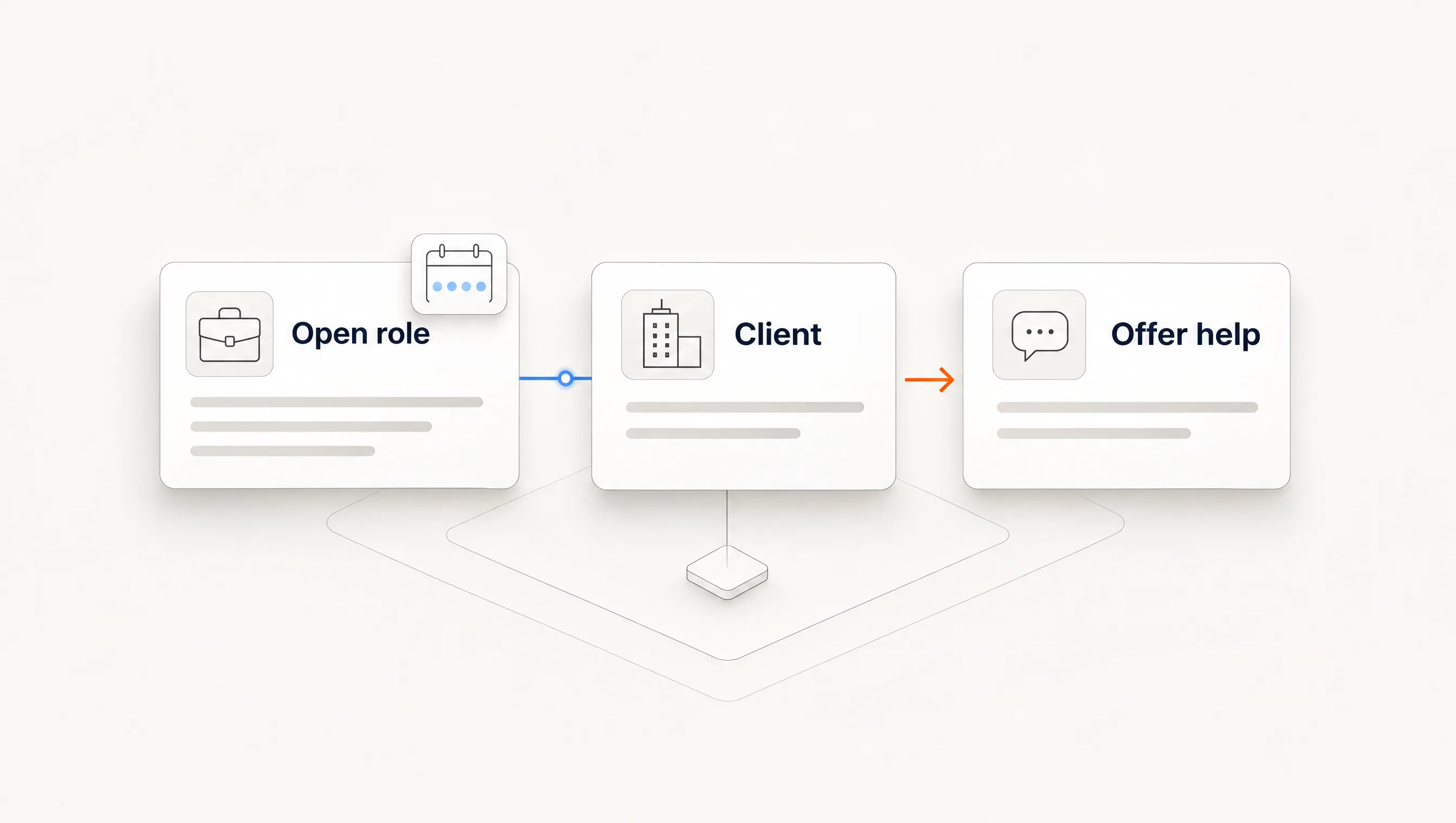
  • New evidence: another relevant fact about their situation, such as a second related job opening.
  • A useful resource: a short example, checklist or answer to a likely question.
  • A narrower question: something easier to answer than the first email asked.
  • A redirect: ask whether someone else owns the topic.

The last email should make it easy to say no. A short close-the-loop note that you will not follow up again is enough; guilt-driven “break-up” lines can read as pressure. Our signal-based email templates include a follow-up you can adapt.

When to stop: the rules that matter most

A sequence that does not stop reliably does more damage than a weak message. Perpetual handles each event this way:

EventWhat happens
Any human replyStops the sequence for that person
Unsubscribe or spam complaintStops it and suppresses the address
Hard bounceStops it and marks the address invalid
Out-of-office replyPauses it instead of stopping
Soft bounceHolds it until delivery is resolved
You email the person manuallyHolds it and hands the thread to a person

Two practical points. A reply stops the sequence even when it is unclear, because a human answer always deserves a human response. And opt-outs must be honored quickly: Yahoo asks bulk senders to process unsubscribes within 2 days, and the US CAN-SPAM rules allow at most 10 business days.

Measure replies by step

Count replies and positive replies for each step separately, against the number of people who actually received that step. If almost all replies come from the first email, your follow-ups are not adding anything. If the last step brings mostly opt-outs, shorten the sequence. Compare cohorts over the same time window, as our signal-based outbound scorecard describes.

Download the follow-up sequence planner (CSV). It has a row for each step with its timing, purpose, new information and stop conditions, plus columns for recipients, replies and opt-outs by step.

Where Perpetual fits

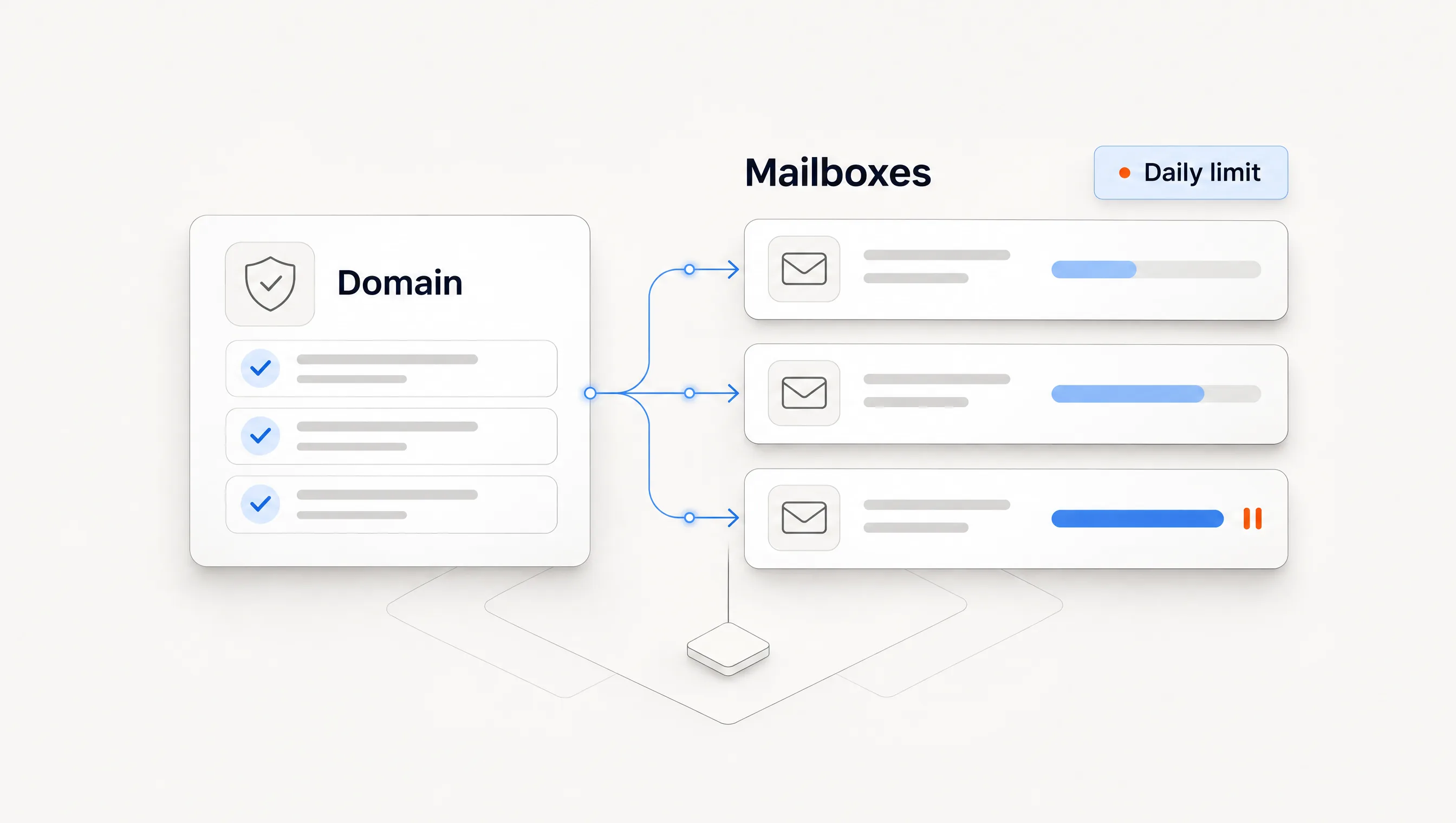
Perpetual writes each follow-up from the same evidence as the first email, applies the timing and stop rules above, and sends from your connected Google Workspace mailboxes. You can shorten a sequence or change its steps, within the four-step limit. See the quickstart guide.

Frequently asked questions

How many follow-up emails is too many?

More than three follow-ups to someone who has not replied is usually too many for cold outreach. Perpetual caps sequences at four steps in total.

How long should I wait before following up?

About a week after the first email, and at least three days between any two steps. Later steps can wait longer.

Should I follow up after an out-of-office reply?

Pause until the person is back, then continue. Do not count the auto-reply as a response.

What should a follow-up email say?

One new, relevant thing: a fact, a resource, a simpler question or a request to redirect you. Never only a reminder.
Keep reading51 more
01

ZoomInfo Alternatives for Small B2B Teams: Prices Checked

Compare ZoomInfo alternatives for small B2B teams by published price, price per credit and what a credit buys. Includes a 20-person data test.

Evaluation7 min read
02

Pay Per Lead vs. Subscription vs. Pay Per Result: Outbound Pricing Models

Pay per lead vs subscription vs pay per result: who carries the risk, what counts as a lead, what you keep, and a free checklist to compare offers.

Evaluation6 min read
04

Hiring Signals by Role: What 12 Job Postings Tell Sellers

Hiring signals by role: what 12 common job postings suggest, which offers they fit, who to contact first and what each posting does not prove.

Signals5 min read
05

How Staffing Agencies Find Clients Using Job Postings

Find staffing agency clients through job postings: which roles to pursue, who owns the hire, what to say first, and a free client research sheet.

Research8 min read
06

How to Build an ICP for B2B Outbound, Even With Few Customers

Build an ICP for B2B outbound as a testable hypothesis, even with few customers. Criteria, persona, unknown data and a free ICP worksheet.

Research7 min read
07

How to Scale Cold Email Without Burning Your Domain

Scale cold email without burning your domain: Google, Yahoo and Microsoft rules, mailbox ramp-up, sending caps, stop rules and a free planner.
Outreach7 min read
08

Unify Alternatives: 6 Options Compared on Price and Fit

Compare six Unify alternatives on price, fit and sending model, with Unify's own pricing checked November 16, 2026, and when to stay with it.

Evaluation6 min read
09

Pipeline Generation Tools: How to Choose by the Job You Need Done

Five types of pipeline generation tools, the outbound steps each covers, how to find your bottleneck and a 30-account pilot worksheet.

Evaluation7 min read
10

Intent Data Tools: 4 Source Types and How to Test Them

Compare intent data tools by source: first-party, publisher co-op, review site and public events. Includes a 25-account accuracy test worksheet.

Signals7 min read
11

The GTM Tech Stack for a Small B2B Team, Stage by Stage

Which go-to-market tools a small B2B team needs at each stage, what to skip, and how to audit handoffs. Includes a free stack audit worksheet.

Evaluation6 min read
12

Account Discovery vs. Account Monitoring: Which Do You Need?

When to find new accounts and when to watch the ones you own, how to split seller capacity between both, and a weekly routine with a free worksheet.

Signals6 min read
13

Best Hiring Signal Tools for B2B Sales: 6 Options Compared

Compare six hiring signal tools by source, published price and the work each leaves to your team. Includes a free 20-company test worksheet.

Evaluation9 min read
14

What Signal-Based Outbound Really Costs: 5 Stacks Priced Line by Line

Five outbound stacks priced from public pricing pages for 500 contacts a month, with human time, plan limits and a free cost worksheet.

Evaluation8 min read
15

Clay Alternatives for Teams Without a GTM Engineer

Choose a Clay alternative by the job you need done. One hiring workflow mapped across five options, plus when you should stay with Clay.

Evaluation7 min read
16

What 2,039 Job Postings Tell Sellers, and What They Can't

Original data from 2,039 public job postings: 14% of rows were duplicates, and 97.6% of vacancy motives remained unknown. Methods and limits explained.

Research8 min read
17

Signal Stacking for B2B Sales: 5 Plays You Can Build

Combine independent buying signals into a clear account decision. Five practical plays, a worked example and a free signal-stacking CSV worksheet.

Signals9 min read
18

How to Find Decision-Makers Using Hiring Signals

Use job responsibilities and reporting lines to find a relevant first sales contact. Includes six scenarios, three examples and a free contact-selection matrix.

Research9 min read
19

How to Find Companies Hiring RevOps Leaders

Find and qualify companies hiring RevOps leaders through current job postings. Reusable searches, mandate checks and a free prospecting worksheet.

Research8 min read
20

AI SDR vs. Sales Automation: What Does Your Team Need?

Compare AI SDRs and sales automation across eight outbound jobs, operating cost and human ownership. Includes a four-week pilot and a free CSV worksheet.

Evaluation10 min read
21

Best Buying Signal Tracking Platforms in 2026: How to Compare Them

Compare buying signal platforms by account events, people changes, topic intent and workflow tools, with a checklist and a two-week test.

Evaluation9 min read
22

What Is Signal-Based Prospecting? Definition, Six Signals and a Weekly Workflow

What signal-based prospecting is, six signals to track, what each cannot prove, and a weekly workflow from observation to grounded outreach.

Signals8 min read
23

AI-Powered Go-to-Market Platforms for B2B SaaS Pipeline Generation: What to Compare

Compare AI GTM platforms for B2B SaaS: four categories, limits on AI decisions, sending controls and questions to ask before buying.

Evaluation7 min read
24

Sales Intelligence Tools for B2B Teams With Long Sales Cycles

What to look for in sales intelligence tools when deals take months: change tracking, history, multiple contacts, re-open triggers and a 90-day test.

Evaluation8 min read
25

12 Buying Signal Examples and What to Do Next

A practical buying-signal library: what each observation supports, what remains unknown, and the next step to take. Includes a free CSV worksheet.

Signals8 min read
26

How to Use Hiring Signals for Sales Prospecting

Turn public job postings into a focused prospecting play: check account fit, verify the evidence, find the responsible person and write a relevant opener.
Research8 min read
27

4 Signal-Based Cold Email Templates You Can Adapt

Original cold email templates for relevant hiring, new responsibilities, expansion and useful follow-ups. Includes source checks and a free CSV download.
Outreach7 min read
28

How to Measure Signal-Based Outbound: A Campaign Scorecard

Measure account selection, positive replies, qualified meetings held and total cost with clear denominators. Includes a free account-level CSV worksheet.

Research8 min read
29

Job Postings as Buying Signals: What They Tell You

Which job postings matter for which offer: clustered roles, a first hire in a new function or a reposted role, and what a posting does not prove.

Signals10 min read
30

Hiring Signals vs. Intent Data: What Each Shows

Where hiring signals and third-party intent data come from, how fresh and checkable each is, and when to use one, the other or both.

Signals9 min read
31

How to Find Companies Hiring SDRs (and When to Reach Out)

Find companies hiring SDRs on careers pages, job boards and LinkedIn Jobs, judge each posting, and decide whom to email and when.

Research9 min read
32

CRM vs. Dedicated GTM Automation Platform: Which Do You Actually Need?

Compare CRM and GTM automation by the work each owns, the gaps in your stack and the integration rules that connect them.

Evaluation8 min read
33

How to Evaluate a GTM Automation Vendor's Approach to Intent Signals

A checklist for evaluating how a GTM automation vendor sources, qualifies and acts on intent signals, and how to test it on your own data before you buy.

Evaluation7 min read
34

Using Signal Data to Optimize Paid Acquisition Campaigns

Use conversion values, clean events, B2B pipeline stages and account observations to guide paid acquisition and targeting.

Signals8 min read
35

When to Bring In CRM and GTM Integration Experts

When to hire CRM and GTM integration help, which specialist fits the problem, and what to settle before bringing one in.

Evaluation6 min read
36

Account Data Management: What Sales Teams Should Evaluate Before Buying

Evaluate account data software with checks for accuracy, freshness, ownership, integration, missing data and change tracking.

Evaluation6 min read
37

Signal-Based Prospecting for Enterprise RevOps Teams With Complex Deal Cycles

How enterprise RevOps teams use buying signals to reach accounts before the RFP, keep them out of open deals, reach the buying group and measure pipeline.

Signals8 min read
38

How to Automate Acting on Buying Signals to Move Deals Forward

How to automate acting on buying signals: a playbook per signal type, what stays human, routing, drafting from evidence and a four-week rollout.

Outreach8 min read
39

Real-Time Buying Signal Detection: How to Evaluate Go-to-Market Platforms That Make It Core

What real-time buying signal detection means per signal family, how fresh each should be, and how to tell a core capability from a bolt-on feature.

Signals8 min read
40

Go-to-Market Platforms That Integrate With Your CRM and Marketing Automation: What to Check Before You Buy

Evaluate GTM integration with your CRM and marketing tools: field ownership, read and write rules, suppression and a one-week test.

Evaluation8 min read
41

Sales Automation Platforms With Fast Implementation: How to Get Live in Weeks, Not Quarters

What makes sales automation slow to implement, what fast implementation looks like, questions to ask before you sign, and a four-week plan to go live.

Evaluation6 min read
42

Revenue Automation Platforms for Mid-Market Teams Pursuing Continuous Opportunity Discovery

A practical guide to revenue automation platforms that help mid-market teams find opportunities continuously, act on signals, and move deals forward.

Evaluation3 min read
43

Unified Go-to-Market Platforms: Combining Signal Detection and Deal Progression

What unified go-to-market platforms are, how they combine signal detection with deal progression, and what to look for when evaluating them.

Signals3 min read
44

Affordable Signal-Based Pipeline Generation Tools for Bootstrapped Startups

Compare manual watchlists, TheirStack, Unify and PredictLeads with checked entry prices, limits and the work a startup still needs to do.

Evaluation4 min read
45

Migrating From Manual Prospecting to an Automated Signal-Based Go-to-Market System

How to move from manual prospecting to an automated signal-based go-to-market system: what changes, the stages, the data work and the pitfalls.

Signals3 min read
46

Choosing go-to-market automation for a small sales team with no ops function.

A small team needs fewer moving parts, not more dashboards. Four questions to decide what to automate and what to keep in human hands.

Evaluation3 min read
47

Signal-based prospecting for startups that need predictable pipeline.

Volume outbound makes pipeline feel random. Prospecting against observable buying moments gives a startup a steadier rhythm, if the signals are checked first.

Signals3 min read
48

Tools That Help Sales Development Teams Prioritize High-Intent Accounts Without Manual Research

Evaluate SDR tools by the research they remove, the evidence behind account rankings, contact quality and the work left for your team.

Evaluation4 min read
49

Evaluating Customer Support and Track Record in Signal-Based Sales Platforms

How to evaluate customer support and track record when you compare signal-based sales platforms, from reference calls to CRM sync and time-to-first-signal.

Signals13 min read
50

A signal is not a buying intent.

A new hire tells you something changed. It does not tell you someone is ready to buy. Better outbound starts with that distinction.

Signals2 min read
51

What belongs in a lead brief?

The source, the change, the timing, and the unanswered question. A small brief that makes an outbound decision easier to review.

Research2 min read
52

Write the question before the pitch.

A practical way to turn account research into an opener that earns a conversation without overstating what you know.

Outreach2 min read

Put your GTM in perpetual motion.

Get started

Sending stays within the limits you set, and you can pause it any time.

How Many Follow-Up Emails to Send, and When to Stop